
Fats, Oils, and Grease (FOG) Management is a key operating need in commercial kitchens. Large-scale preparation of food releases a lot of organic waste that will begin to solidify within drainage systems very rapidly. FOG and grease interceptor lines are kept in peak working order with the help of specialized technology and protocols from a professional commercial drain cleaning service.
Why is FOG accumulation particularly hazardous for commercial kitchens?
Great quantities of warm, liquid animal fats and vegetable oils are produced in commercial food production. This wastewater cools and solidifies quickly on the interior walls of the drainage lines as it flows down the floor sinks, dishwasher drains, and prep station drains. Blocked drains in York or elsewhere can also be cleared of FOG accumulation.
Eventually, FOG is saponified, chemically combining with alkaline materials in wastewater to create a dense, concrete-like deposit. Untreated FOG can result in serious kitchen backups, odors, health code violations, and expensive emergency closures.
How do grease interceptor lines function within commercial drainage systems?
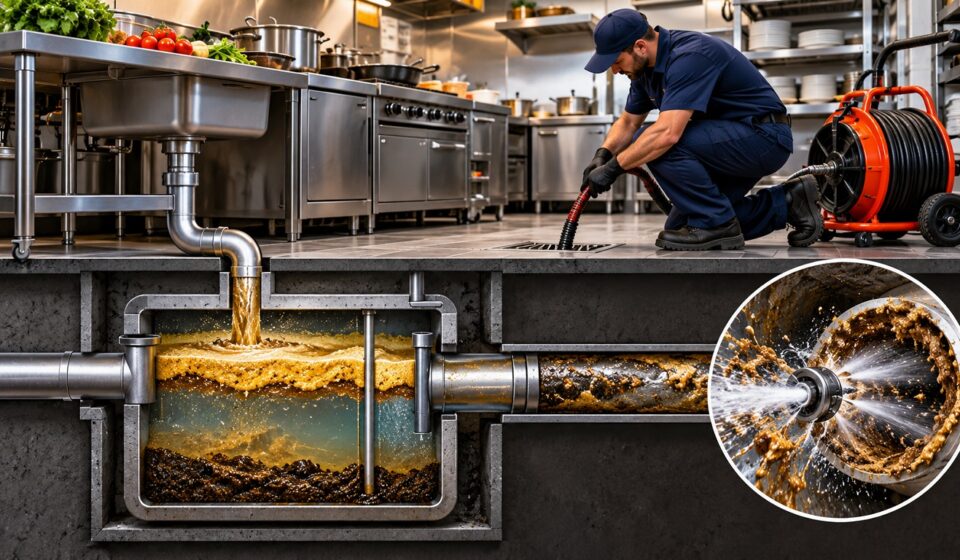
A grease interceptor (or trap) is a mechanical filter that is installed in the line between kitchen equipment and the municipal sewer. They employ a gravity differential settling method, where the lighter oils and grease (FOG) rise to the top, the heavier solids in the food fall to the bottom, and the clearer water is removed from the middle.
The influent and effluent lines that attach to the interceptor, however, constantly build up sticky layers of grease, which can decrease the capacity of the lines and lead to backups if not regularly scoured.
How does high-temperature hydro-jetting clear heavy grease deposits?
Narrow holes can be made in the heavy grease by standard mechanical snaking. Standard commercial drain cleaning uses high-pressure and high-temperature hydro-jetting. Water is pumped at high pressure (2,000 to 4,000 PSI) and at a high temperature (160° F to 180° F) in specialized jetting rigs.
Thermal heat plus multi-directional kinetic water streams will melt hardened FOG and clean the entire circumference of the pipe, returning diameter and flow rate to their original condition.
What role do bio-remediation and enzymatic treatments play in FOG management?
Mechanical jetting is not the only form of advanced commercial maintenance; biological remediation is also a part of it. Automated bio-dosing systems are introduced directly into a drain line with live, naturally occurring bacteria and vegetative enzymes.
These micro-organisms actively digest leftover molecules of FOG and break them down into harmless carbon dioxide and water. This “green” method will ensure that FOG will not re-solidify in interceptor connections downstream. The drain cleaning in Leeds or other places can also be done with bio-remediation.
How frequently should commercial venues schedule routine interceptor line jetting?
The frequency of maintenance shall be determined by kitchen output, menu, and seating capacity. Professional hydro-jetting and interceptor line cleaning is generally needed on a regular basis, typically every 3 to 6 months, for high-volume operations like fast food restaurants, hotels, and large restaurants.
A regular preventative cleaning cycle will help to meet the limits of discharge issued by the local municipalities and avoid major blockages to the main line during peak operating times.
Conclusion
Food, oil, grease, and solids (FOG) and grease interceptor lines must be managed with a dedicated, technology-based business drain cleaning program. Food service operators utilize the combination of high-temperature hydro-jetting and biological remediation processes to safeguard their plumbing system, achieve municipal compliance, and prevent loss of operational time. The routine professional maintenance transforms a risky liability into a smooth, hygienic, and continuous operation of the kitchen.