
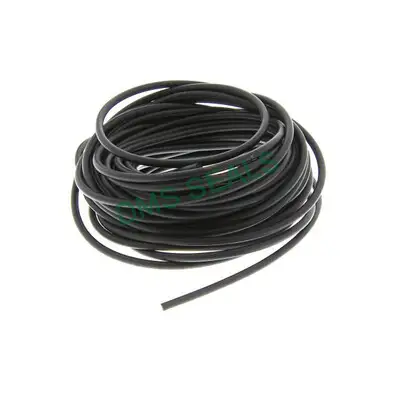

O-rings are essential sealing components used across a wide range of industries, including automotive, aerospace, construction, oil and gas, and industrial manufacturing. Their primary function is to prevent fluid and gas leakage while maintaining pressure within mechanical systems. Although their design is relatively simple, producing dependable O-rings requires careful material selection, precise manufacturing processes, and consistent quality control.
Choosing the right manufacturing partner is therefore an important consideration for businesses that depend on reliable sealing solutions. A professional O Ring Manufacturer should combine technical expertise, suitable production capabilities, and strict quality standards to meet different industrial requirements. Understanding the characteristics of a reliable manufacturer can help buyers make better sourcing decisions and maintain consistent product performance.
1. Consistent Raw Material Quality
The quality of an O-ring begins with the raw materials used during production. Different applications require different elastomers depending on operating temperatures, pressure levels, chemical exposure, and environmental conditions.
A reliable manufacturer should carefully select materials according to their intended applications and maintain consistency between production batches.
Common O-ring materials include:
- Nitrile (NBR): Commonly used in applications involving oils, fuels, and hydraulic fluids.
- Fluorocarbon (FKM): Suitable for many high-temperature and chemical-exposure applications.
- EPDM: Frequently used in water, steam, and outdoor environments.
- Silicone: Offers flexibility across a broad temperature range.
- Neoprene: Provides useful resistance to weathering and certain oils and chemicals.
Material selection should always be based on actual operating conditions rather than general assumptions about elastomer performance.
2. Advanced Manufacturing Processes
Manufacturing accuracy plays a significant role in determining the performance of O-rings. Small variations in dimensions or material properties can affect how effectively a seal fits within its installation groove.
Reliable manufacturers use appropriate production techniques and controlled processes to maintain product consistency.
Common manufacturing methods include compression molding, transfer molding, and injection molding. The choice depends on factors such as material type, product design, production volume, and required tolerances.
An organized manufacturing process helps reduce defects and supports consistent product dimensions across different production batches.
3. Strict Quality Control and Inspection
Quality control is one of the most important characteristics of a dependable O-ring manufacturer. Products must meet the required specifications before they are supplied for industrial use.
Manufacturers should maintain inspection procedures covering dimensions, surface condition, material properties, and other application-related requirements.
Important quality checks may include:
- Inside diameter and cross-sectional measurements.
- Dimensional tolerance verification.
- Visual inspection for cracks, cuts, and surface defects.
- Material hardness testing.
- Relevant physical property testing.
Depending on the application, additional tests may be necessary to evaluate compression set, tensile strength, chemical resistance, or temperature performance.
These procedures help ensure that finished products meet defined quality requirements.
4. Technical Expertise and Material Knowledge
Producing suitable O-rings requires more than operating manufacturing equipment. Manufacturers must understand how different elastomers behave under varying operating conditions.
For example, an O-ring used in a hydraulic cylinder may have different material and performance requirements from one installed in a food-processing system.
A technically capable manufacturer should understand:
- Material compatibility with operating fluids.
- Temperature and pressure limitations.
- Hardness and elasticity requirements.
- Static and dynamic sealing conditions.
- Dimensional tolerances and groove design.
This knowledge supports better product development and helps prevent common sealing problems.
5. Ability to Manufacture Different Sizes and Specifications
Industrial applications rarely use a single O-ring size. Equipment designs often require different inner diameters, cross-sectional dimensions, and material hardness levels.
A reliable manufacturer should offer a suitable range of standard sizes and have the production capabilities to accommodate specialized requirements.
Custom manufacturing may involve non-standard dimensions, specific elastomer formulations, or particular performance characteristics.
Buyers should also check whether manufacturers can work from technical drawings, sample components, or detailed product specifications.
This flexibility is valuable for businesses that operate specialized machinery or maintain equipment from different manufacturers.
6. Compliance With Relevant Industry Standards
Industry standards help establish consistent expectations for product dimensions, material properties, and manufacturing quality.
A professional manufacturer should understand the standards relevant to its products and applications.
For example, AS568 is widely used for O-ring size identification in inch-based applications, while ISO 3601 provides specifications relating to O-rings used in fluid power systems.
Depending on the application, buyers may also need to consider material-specific requirements and industry regulations.
It is important to verify the manufacturer’s actual certifications and product documentation rather than assuming that every product meets a particular standard.
7. Production Capacity and Order Management
A manufacturer may produce high-quality products but still struggle to meet customer requirements if its production capacity is limited.
Businesses should evaluate whether a potential manufacturing partner can manage regular orders, bulk requirements, and changing production schedules.
Important considerations include:
- Available manufacturing capacity.
- Production planning procedures.
- Raw material availability.
- Order processing efficiency.
- Ability to manage repeat and customized orders.
A manufacturer with effective production management can help businesses maintain a more predictable supply of essential sealing components.
8. Product Customization and Development Capabilities
Some sealing applications require products that differ from standard commercial specifications. In such cases, manufacturing flexibility becomes particularly important.
A capable manufacturer should be able to evaluate custom requirements and determine suitable production methods.
Customization may involve:
- Special O-ring dimensions.
- Different material hardness levels.
- Application-specific elastomer compounds.
- Particular color or identification requirements.
- Specialized performance characteristics.
Businesses should provide accurate technical information during the development process to ensure that the finished product meets its intended purpose.
9. Reliable Delivery and Professional Communication
Manufacturing quality is only one part of a successful business relationship. Timely delivery and clear communication are equally important for organizations that depend on regular component supplies.
A reliable manufacturer should provide realistic production schedules, accurate order information, and updates when delays or specification changes occur.
Businesses should also evaluate packaging, shipping arrangements, and the manufacturer’s ability to manage recurring orders.
Effective communication helps prevent misunderstandings and makes long-term procurement planning easier.
10. Competitive Pricing and Long-Term Value
Pricing is an important factor when selecting an O-ring manufacturer, particularly for businesses with large or recurring purchasing requirements.
However, the lowest quotation does not necessarily represent the best value. Poor manufacturing consistency or unsuitable materials may result in frequent replacements, maintenance expenses, and equipment downtime.
A better approach is to compare manufacturers based on overall product value.
Consider material quality, manufacturing accuracy, inspection procedures, product durability, customization capabilities, and delivery reliability alongside the quoted price.
This approach helps businesses make purchasing decisions that support long-term operational efficiency.
11. After-Sales Support and Customer Relationships
A reliable manufacturer should maintain professional communication even after products have been delivered.
Customers may need assistance with product specifications, quality concerns, replacement requests, or future manufacturing requirements.
A clear process for handling complaints and addressing non-conforming products demonstrates accountability and supports a more productive business relationship.
Manufacturers that understand customer requirements and respond effectively to concerns are generally easier to work with over time.
How to Evaluate an O-Ring Manufacturer Before Choosing One
Before entering into a manufacturing agreement, businesses should conduct a practical evaluation of potential suppliers.
The following checklist can help simplify the process:
- Review manufacturing capabilities and available materials.
- Request product specifications and relevant quality documentation.
- Check whether dimensional tolerances meet application requirements.
- Ask about production capacity and order lead times.
- Evaluate customization and technical support capabilities.
- Compare quotations based on overall product value.
- Review customer feedback and industry experience.
- Clarify quality complaint and replacement procedures.
Taking these steps can help identify manufacturers that are capable of meeting both immediate and long-term requirements.
Conclusion
A reliable O-ring manufacturer combines consistent raw material quality, accurate production processes, effective inspection procedures, and strong technical knowledge. Additional capabilities, including customization, production planning, timely delivery, and professional customer support, also contribute to a successful manufacturing relationship.
For businesses operating in demanding industrial environments, selecting a manufacturer should involve more than comparing prices or product availability. Evaluating manufacturing standards, technical capabilities, and long-term reliability helps ensure that sealing components meet application requirements and support dependable equipment performance.