
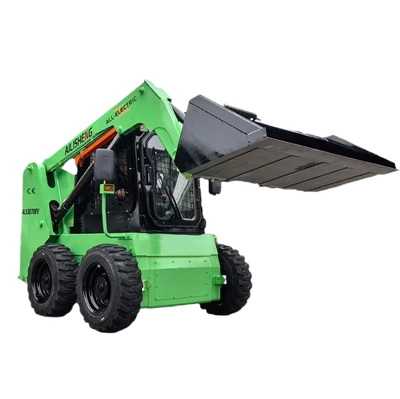

Construction equipment plays an important role in infrastructure development, landscaping, material handling, and building maintenance. However, traditional diesel-powered machinery can generate considerable noise and exhaust emissions, particularly in busy urban areas and enclosed workspaces. As businesses look for ways to improve working conditions and reduce their environmental impact, electric construction equipment is becoming an increasingly relevant option.
An Electric Skid Steer uses rechargeable batteries and electric motors instead of a conventional diesel engine to power its operations. This design can help reduce operating noise and eliminate exhaust emissions at the point of use. These characteristics make electric skid steers worth considering for construction sites, warehouses, agricultural facilities, and other locations where noise and air quality are important concerns.
Understanding Electric Skid Steer Technology
An electric skid steer is a compact machine designed to move materials, perform lifting tasks, and operate compatible attachments. Its battery-powered system supplies energy to the electric motors and other working components, depending on the machine’s design.
Like diesel skid steers, electric models can support tasks such as transporting materials, clearing debris, preparing surfaces, and maintaining work areas. Their suitability depends on operating capacity, battery runtime, hydraulic performance, and attachment compatibility.
The key difference is that electric models do not rely on diesel combustion to generate power. This changes how they produce noise and emissions during normal operation.
How Electric Skid Steers Reduce Noise
Noise reduction is one of the most noticeable benefits of electric construction equipment. Diesel machines generate sound from engine combustion, exhaust systems, cooling fans, and other moving components. Electric drivetrains generally eliminate much of the noise associated with a conventional internal combustion engine.
Although electric skid steers still produce sound from tires, hydraulics, attachments, and movement, their overall noise profile can be more suitable for certain work environments.
1. Quieter Operation in Urban Construction Areas
Construction projects in residential neighborhoods and commercial districts often operate near occupied buildings. Excessive machinery noise can disturb residents, workers, customers, and nearby businesses.
Electric skid steers generally produce less operating noise than comparable diesel machines, which may help reduce disruption during material handling and other suitable tasks. Contractors must still comply with local noise regulations and project-specific working-hour restrictions.
2. Improved Conditions Inside Buildings
Warehouses, factories, parking structures, and large commercial buildings may require compact equipment for moving materials and maintaining floors. Diesel engine noise can make communication difficult in these environments.
Electric skid steers can provide a quieter alternative for suitable indoor applications. Reduced machinery noise may help workers communicate more clearly, although other equipment, alarms, and workplace noise sources must also be considered.
3. Better Suitability for Noise-Sensitive Locations
Some construction and maintenance activities take place near hospitals, schools, offices, and public facilities. In these settings, reducing unnecessary noise can be an important operational objective.
Electric skid steers may be useful for scheduled maintenance, landscaping, and material handling in noise-sensitive locations. Actual benefits depend on the specific machine, attachment, surface, and intensity of the work.
4. Potential Benefits for Operator Comfort
Continuous exposure to machinery noise can contribute to fatigue and make communication more difficult. Quieter equipment may improve the operator’s working environment, particularly during repetitive tasks.
However, lower equipment noise does not eliminate the need for hearing protection or workplace noise assessments. Contractors should follow applicable occupational safety requirements and evaluate actual sound levels at the job site.
How Electric Skid Steers Reduce Local Emissions
Electric skid steers also offer an important difference in how they affect air quality around the operating machine. Diesel engines release exhaust gases during operation, while battery-powered electric machines do not produce combustion exhaust at the point of use.
This distinction can be especially valuable in enclosed facilities and locations where air quality needs careful management.
1. No Exhaust Emissions During Operation
Electric skid steers do not release diesel exhaust while operating. This eliminates the machine’s direct exhaust emissions, including combustion-related pollutants produced by diesel engines.
The benefit is particularly relevant in indoor material-handling applications, where exhaust from combustion equipment may require additional ventilation and emissions controls. Electric equipment must still be used according to site safety requirements, and its overall environmental footprint includes electricity generation and battery manufacturing.
2. Reduced Exposure to Diesel Exhaust
Diesel exhaust can contain fine particulate matter and nitrogen oxides, along with other combustion-related pollutants. Exposure is a concern in poorly ventilated spaces and areas where workers spend extended periods near operating machinery.
Using electric equipment can remove the machine’s direct diesel exhaust source from the work area. Nevertheless, operators should assess other potential pollutants, maintain appropriate ventilation, and follow workplace health and safety procedures.
3. Better Suitability for Enclosed Workspaces
Indoor construction, industrial maintenance, and warehouse operations may require machinery that can work without producing engine exhaust. Electric skid steers can be appropriate for these applications when their dimensions, operating capacity, and safety features meet site requirements.
Before using any machine indoors, contractors should confirm the suitability of the working environment, battery charging arrangements, ventilation requirements for other equipment, and applicable regulations.
4. Support for Lower-Emission Construction Operations
Construction companies may use electric equipment to reduce direct emissions from their machinery fleets. Replacing selected diesel-powered tasks with electric alternatives can contribute to lower on-site exhaust emissions.
The total environmental benefit depends on how the electricity is generated, the efficiency of the machine, battery production, and equipment lifespan. Even so, eliminating exhaust at the point of operation can be an important step toward cleaner construction practices.
Electric Skid Steer vs. Diesel Skid Steer: Noise and Emissions Comparison
The following comparison highlights the main differences between electric and diesel skid steers.
| Feature | Electric Skid Steer | Diesel Skid Steer |
|---|---|---|
| Power source | Rechargeable battery | Diesel fuel |
| Engine combustion noise | None | Present |
| Overall operating noise | Generally lower | Generally higher |
| Exhaust emissions at the machine | None during operation | Produced during operation |
| Indoor applications | Often suitable, subject to site requirements | Requires appropriate exhaust ventilation |
| Charging or refueling | Requires charging infrastructure | Requires fuel access |
| Environmental impact | Depends partly on electricity and battery production | Includes fuel production and combustion emissions |
Actual noise levels and environmental performance vary by machine model and operating conditions. A proper comparison should consider the complete equipment system rather than focusing on a single specification.
Where Noise and Emission Reduction Matters Most
Electric skid steers can be especially useful in applications where reducing noise and local exhaust emissions provides practical value.
Indoor Construction and Renovation
Electric machines can support material movement, debris collection, and other suitable activities in large buildings. Their lack of direct exhaust emissions and generally quieter operation may help contractors manage work in occupied or enclosed spaces.
Warehousing and Industrial Facilities
Facilities often use compact equipment to move supplies, clear work areas, and maintain floors. Electric skid steers may suit these environments when the machine’s operating capacity and attachments match the task.
Landscaping in Residential Areas
Landscaping and property maintenance can require equipment near homes, schools, and public spaces. Quieter operation may reduce disturbance while allowing operators to perform suitable material-handling and ground-preparation tasks.
Agricultural Buildings
Barns, storage facilities, and other agricultural buildings may benefit from equipment that does not produce diesel exhaust during operation. Farmers should still consider animal safety, floor conditions, charging access, and the machine’s ability to handle the required workload.
Additional Benefits of Electric Skid Steers
Noise and emission reduction are important advantages, but they are not the only factors buyers should consider.
Electric skid steers may require fewer conventional engine-related maintenance tasks because they do not have diesel engine oil, fuel injection, or exhaust after-treatment systems in the same way as combustion-powered models. Their operating costs may also be favorable where electricity prices are competitive.
However, battery condition, hydraulic systems, electric motors, cooling components, tires or tracks, and attachments still require maintenance. Battery runtime and charging availability can also affect productivity during long or demanding shifts.
Buyers should compare purchase price, energy consumption, maintenance, charging infrastructure, and expected battery replacement costs before choosing a machine.
Factors to Consider Before Purchasing an Electric Skid Steer
Before selecting electric equipment for noise-sensitive or emission-sensitive projects, evaluate the following requirements:
- Operating runtime: Confirm that the battery can support the planned workload and shift length.
- Charging access: Determine whether suitable electrical infrastructure is available at the work site.
- Machine capacity: Check rated operating capacity, lifting height, and hydraulic performance.
- Noise specifications: Request measured sound-level information when noise limits are important.
- Indoor suitability: Verify that the machine meets the site’s ventilation, access, and safety requirements.
- Service support: Assess the availability of qualified technicians, spare parts, and battery servicing.
These checks help ensure that environmental benefits do not come at the expense of operational efficiency or workplace safety.
Conclusion
Electric skid steers can help reduce construction-site noise and eliminate direct exhaust emissions during operation. Their quieter electric drivetrains and battery-powered systems make them useful alternatives for selected indoor applications, urban projects, landscaping, and industrial facilities where air quality and noise management are important.
However, their practical value depends on battery runtime, charging infrastructure, operating capacity, and the demands of the job. By evaluating these factors alongside environmental and workplace requirements, contractors can determine whether electric skid steers are a suitable choice for cleaner and quieter construction operations.