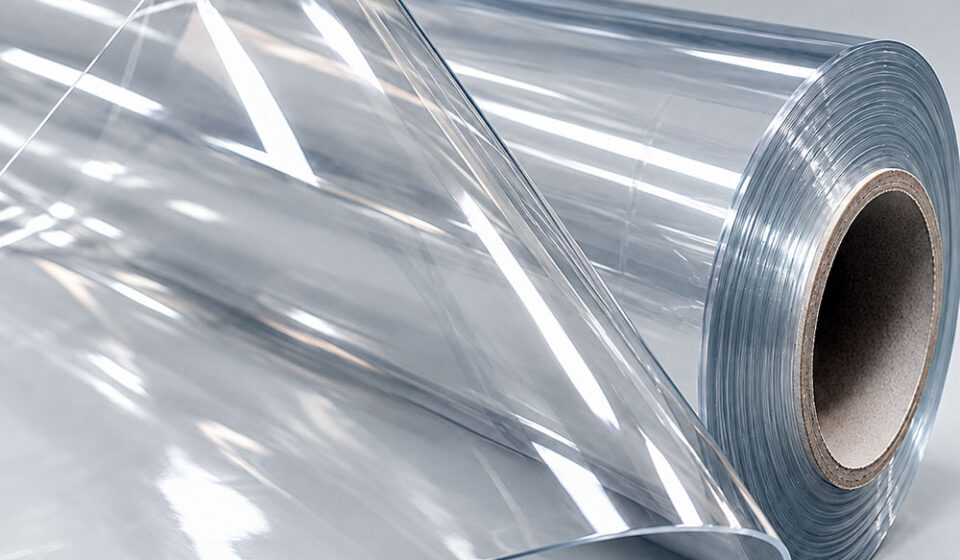

Ordering PVC film from overseas manufacturers can provide businesses with access to a wider range of products, competitive pricing, and specialized manufacturing capabilities. However, international sourcing also involves additional considerations, including product specifications, quality standards, shipping arrangements, import regulations, and communication with suppliers. Understanding these factors before placing an order can help importers avoid unnecessary costs and delays.
Choosing reliable manufacturing partners is an important part of the process. Experienced PVC Film Suppliers can help buyers understand available material options, confirm technical requirements, and coordinate production according to specific application needs. Before committing to an overseas order, importers should evaluate both the supplier’s manufacturing capabilities and the practical requirements of international trade.
1. Understand Your PVC Film Requirements
The first step is identifying exactly what type of PVC film your business needs. PVC film is available in different thicknesses, widths, colors, finishes, and formulations. Each variation may be suitable for a different industrial or commercial application.
For example, packaging manufacturers may prioritize transparency and flexibility, while furniture manufacturers may require decorative finishes and consistent surface quality.
Before contacting suppliers, define the following specifications:
- Film thickness and acceptable tolerance.
- Required width and roll length.
- Transparent, colored, printed, or embossed finish.
- Rigid or flexible PVC formulation.
- Required mechanical properties.
- Intended application and operating environment.
- Packaging and labeling requirements.
Providing clear specifications helps suppliers recommend suitable products and prepare accurate quotations.
2. Evaluate the Supplier’s Manufacturing Experience
Not every overseas supplier has the same production capabilities. Some manufacturers specialize in particular PVC film categories, while others offer a broader product range.
Importers should examine whether a potential supplier has experience producing the material required for their application.
Useful evaluation points include:
- Years of manufacturing experience.
- Types of PVC film produced.
- Available production technologies.
- Monthly or annual production capacity.
- Experience serving international customers.
- Ability to manufacture customized products.
- Quality control procedures.
A supplier’s experience with similar applications can be particularly valuable when technical requirements are complex.
3. Request Samples Before Placing Bulk Orders
Ordering samples is one of the most effective ways to evaluate product quality before making a large financial commitment.
Product descriptions and photographs cannot fully demonstrate how PVC film performs during actual use.
Importers should request samples that match the intended commercial order as closely as possible.
During evaluation, check:
- Thickness and dimensional accuracy.
- Surface smoothness and appearance.
- Transparency or color consistency.
- Flexibility and handling characteristics.
- Tensile and tear performance where relevant.
- Compatibility with existing production equipment.
If the sample meets expectations, retain an approved reference sample for comparison with future shipments.
4. Compare Technical Specifications Carefully
Technical specifications help buyers understand whether a PVC film is suitable for a particular application.
Two products may look similar but perform differently because of variations in formulation, thickness, or manufacturing conditions.
Important technical properties may include:
| Property | Why It Matters |
|---|---|
| Thickness | Influences material dimensions and application suitability |
| Tensile strength | Indicates resistance to pulling forces |
| Elongation | Measures stretching behavior |
| Tear resistance | Helps evaluate resistance to tear propagation |
| Transparency | Important for clear packaging and display applications |
| Hardness | Relevant to material rigidity and handling |
| Thermal stability | Helps assess performance under temperature exposure |
| Surface finish | Affects appearance, printing, and processing |
Importers should request technical data sheets and relevant test reports. They should also confirm the test methods used so that specifications can be compared consistently.
5. Verify Quality Management and Certifications
Quality management practices are essential when sourcing products from another country.
Importers should ask how the manufacturer controls raw materials, production conditions, inspections, and finished-product testing.
ISO 9001 is a widely recognized quality management standard. A valid certification can indicate that a company has established documented quality management processes, although it does not guarantee that every product will meet a particular buyer’s requirements.
Depending on the intended application, importers may also need product-specific documentation.
Examples include:
- Technical data sheets.
- Safety data sheets where applicable.
- Laboratory test reports.
- Chemical compliance declarations.
- Food-contact documentation where required.
- Product inspection records.
Always verify that certificates and test reports apply to the actual manufacturer, product, and intended application.
6. Understand Minimum Order Quantities
Overseas manufacturers often establish minimum order quantities (MOQs) based on production efficiency, material requirements, and customization needs.
The MOQ may vary depending on film thickness, width, color, formulation, and printing requirements.
Before requesting a quotation, ask about:
- Minimum order quantity for standard products.
- MOQ for customized formulations.
- Minimum quantities for special colors.
- Sample and trial-order availability.
- Pricing differences between order volumes.
- Possibility of combining different specifications.
For new supplier relationships, a smaller trial order may help importers assess product quality and delivery performance before increasing purchase volumes.
7. Compare Pricing Beyond the Unit Cost
A low quoted price does not necessarily represent the lowest overall purchasing cost.
International orders involve several expenses beyond the manufacturer’s product price. Importers should calculate the total landed cost before comparing suppliers.
Common cost components include:
- Product unit price.
- Packaging charges.
- Sample and testing costs.
- Inland transportation.
- Export documentation.
- International freight.
- Cargo insurance.
- Customs duties and taxes.
- Port handling and clearance fees.
- Local delivery charges.
For accurate comparisons, request quotations based on the same product specifications, quantities, and Incoterms.
A supplier offering a slightly higher unit price may provide better overall value through reliable quality, suitable packaging, and more predictable delivery.
8. Clarify Payment Terms and Commercial Conditions
Payment arrangements should be discussed before confirming an overseas purchase order.
Different manufacturers may offer different payment methods depending on order size, business history, and commercial risk.
Common arrangements include:
- Advance payment.
- Deposit followed by balance payment.
- Letter of credit.
- Documentary collection.
- Other mutually agreed business-to-business payment arrangements.
Importers should confirm the payment schedule, currency, bank charges, and conditions for releasing the shipment.
For larger transactions, businesses may consider using established trade finance arrangements to manage payment and delivery risks.
All agreed commercial terms should be recorded in the purchase contract or pro forma invoice.
9. Understand International Shipping Options
Shipping arrangements can significantly influence the delivery time and total cost of PVC film imports.
The most suitable transportation method depends on shipment volume, urgency, destination, and product packaging.
Sea Freight
Sea freight is commonly used for large-volume orders because it can offer lower transportation costs per unit. However, transit times are generally longer.
Air Freight
Air freight may be suitable for samples, urgent shipments, or relatively small quantities. It is usually more expensive than sea freight.
Courier Services
International courier services are often useful for small samples and documents.
Before selecting a shipping method, confirm the estimated transit time, freight charges, destination handling costs, and shipment tracking arrangements.
10. Confirm Incoterms and Delivery Responsibilities
Incoterms define important responsibilities between buyers and sellers in international trade.
They clarify matters such as transportation costs, delivery obligations, and when certain risks transfer from the seller to the buyer.
Common Incoterms include:
- EXW (Ex Works): The seller makes the goods available at an agreed location, with many transportation responsibilities assigned to the buyer.
- FOB (Free on Board): Generally used for sea or inland waterway transport, with delivery and risk transfer occurring under the specified port and loading conditions.
- CIF (Cost, Insurance and Freight): The seller arranges and pays for freight and insurance to the named destination port, although risk transfers when the goods are loaded on board the vessel.
- DAP (Delivered at Place): The seller arranges delivery to the named destination, while the buyer generally handles import clearance and applicable import duties and taxes.
The applicable Incoterms edition and precise named location should be stated in the contract.
Importers should understand which party is responsible for freight, insurance, customs procedures, and destination charges before accepting a quotation.
11. Check Import Regulations in Your Destination Country
PVC film imports may be subject to customs requirements, product regulations, and documentation rules that differ between countries.
Before shipment, importers should confirm the applicable requirements with their customs broker or relevant authorities.
Common documents may include:
- Commercial invoice.
- Packing list.
- Bill of lading or airway bill.
- Certificate of origin, where required.
- Product technical documentation.
- Insurance certificate, where applicable.
- Relevant regulatory declarations or test reports.
The correct HS classification is also important because it influences customs treatment and applicable duties.
Importers should not rely solely on a supplier’s suggested classification. They should confirm the correct code and import requirements for their own destination market.
12. Pay Attention to Packaging and Product Protection
PVC film rolls can be affected by unsuitable handling, moisture, dust, compression, and surface contact during transportation.
Poor packaging may result in damaged edges, scratches, deformation, or contamination.
Before production is completed, discuss packaging requirements with the supplier.
Important considerations include:
- Protective wrapping for individual rolls.
- Suitable roll cores.
- Secure palletization.
- Moisture and dust protection.
- Clear product identification labels.
- Appropriate container loading.
- Handling and storage instructions.
For long-distance shipments, packaging should be suitable for the expected transportation and storage conditions.
13. Establish a Clear Quality Inspection Process
Importers should agree on quality requirements before production begins rather than waiting until the goods arrive.
A written inspection plan can help both parties understand the acceptance criteria.
The inspection process may cover:
- Raw material and formulation requirements.
- Film thickness and dimensional tolerances.
- Surface appearance and finish.
- Mechanical performance.
- Color or transparency consistency.
- Roll quantity and packaging condition.
- Batch identification and documentation.
For high-value orders, buyers may arrange independent pre-shipment inspections or laboratory testing.
The purchase agreement should also explain how nonconforming products will be handled, including replacement, rework, credit, or other agreed remedies.
14. Assess Communication and Customer Support
Clear communication is particularly important when the manufacturer and importer operate in different countries and time zones.
A reliable supplier should be able to explain technical details, answer questions, and provide timely updates throughout the order process.
Before placing an order, evaluate whether the supplier can:
- Respond clearly to technical inquiries.
- Provide accurate quotations.
- Confirm production schedules.
- Share inspection results.
- Communicate shipping updates.
- Address quality concerns.
- Provide documentation when requested.
Good communication can reduce misunderstandings and make long-term international sourcing more manageable.
15. Watch for Common Overseas Sourcing Risks
Importing PVC film involves commercial and logistical risks that should be considered before payment.
Some common warning signs include:
Unusually low quotations: Prices far below comparable offers may indicate differences in specifications, quality, or commercial reliability.
Incomplete documentation: Missing technical data sheets, unclear company details, or unverifiable certificates deserve further investigation.
Unclear product specifications: Vague descriptions make it difficult to establish whether delivered goods match the agreed requirements.
Unrealistic delivery promises: Production and shipping estimates should be practical and supported by clear schedules.
Unverified payment details: Importers should independently verify company and banking information before transferring funds.
Conducting basic supplier due diligence and documenting all important agreements can help reduce these risks.
16. Create a Supplier Evaluation Checklist
A structured checklist makes it easier to compare multiple overseas manufacturers objectively.
| Evaluation Area | What to Confirm |
|---|---|
| Product range | Availability of required PVC film types |
| Manufacturing capability | Equipment and production capacity |
| Product quality | Samples and technical test results |
| Certifications | Validity and certification scope |
| MOQ | Standard and customized order requirements |
| Pricing | Complete quotation and additional charges |
| Shipping | Delivery method and estimated schedule |
| Documentation | Export and product-related paperwork |
| Payment terms | Agreed payment method and schedule |
| After-sales support | Complaint handling and replacement policies |
Using the same evaluation criteria for every supplier helps businesses make more informed purchasing decisions.
Conclusion
Ordering PVC film from overseas suppliers can support business growth by providing access to different product options, manufacturing capabilities, and international supply networks. However, successful importing requires more than finding a competitive price. Buyers must understand technical specifications, evaluate product samples, verify quality systems, calculate total landed costs, and confirm shipping and customs responsibilities.
Clear communication and written agreements are equally important. By establishing product requirements and inspection criteria before production, importers can reduce misunderstandings and improve order consistency.
A careful supplier evaluation process helps businesses build dependable international sourcing relationships and obtain PVC film that meets their operational and commercial requirements.