
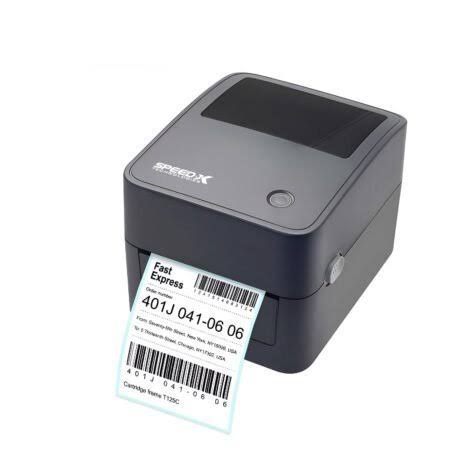

Research and development (R&D) plays an important role in improving the design, performance, and functionality of modern receipt printers. As businesses adopt increasingly advanced point-of-sale systems, printing equipment must meet changing requirements for speed, connectivity, reliability, energy efficiency, and ease of use. Manufacturers need to continually evaluate new technologies and refine existing products to remain competitive in a rapidly evolving market.
R&D is not limited to creating entirely new printer models. It also involves improving components, testing materials, developing firmware, and identifying ways to make production more efficient. A forward-thinking Receipt Printer Manufacturer uses research and technical development to address practical business requirements while improving product quality and supporting future industry needs.
1. Understanding the Purpose of R&D in Receipt Printer Manufacturing
Research and development connects customer requirements with engineering solutions. It helps manufacturers understand how receipt printers are used in different environments and determine which improvements can make equipment more effective.
For example, a printer used at a busy supermarket checkout may require high printing speed and dependable paper handling. A restaurant may prioritize compact dimensions, easy integration with POS software, and flexible connectivity. Mobile businesses may need lightweight printers with wireless communication and rechargeable batteries.
R&D teams study these different requirements before translating them into product designs and technical improvements.
2. Improving Printing Speed and Performance
Printing speed is an important consideration in environments where businesses process many transactions. Slow printing can increase waiting times at checkout counters and affect workflow efficiency.
Manufacturers use research and testing to improve printhead performance, paper-feeding mechanisms, electronic processing, and firmware operations.
Development work may focus on:
- Optimizing printhead control.
- Improving paper movement and alignment.
- Reducing unnecessary processing delays.
- Refining printing commands.
- Improving performance during continuous operation.
These improvements can help receipt printers handle regular workloads more effectively, although actual performance depends on the model, print settings, and operating conditions.
3. Developing More Reliable Thermal Printing Technology
Thermal printing is widely used in modern receipt printers because it produces text without requiring traditional ink cartridges or ribbons. However, consistent output depends on the quality and coordination of several components.
R&D teams investigate printhead materials, heating elements, temperature control, and contact between the printhead and thermal paper.
Research may also examine how printing performance changes under different operating temperatures and workloads. These studies help manufacturers identify ways to improve print clarity, reduce uneven output, and support longer component life.
The goal is to develop printing systems that maintain consistent results during everyday commercial use.
4. Advancing Printhead Design and Materials
The printhead is one of the most important components in a thermal receipt printer. It contains heating elements that create images and text on heat-sensitive paper.
Its design influences resolution, printing consistency, energy consumption, and durability.
R&D activities may involve evaluating:
- Heating element arrangements.
- Protective coatings.
- Heat distribution.
- Thermal response time.
- Wear resistance.
- Electrical control methods.
Engineers can use laboratory testing and repeated printing cycles to study how different materials and designs perform. Improvements in these areas may contribute to more consistent output and better long-term reliability.
5. Enhancing Connectivity and Device Integration
Modern receipt printers must communicate with a wide range of POS terminals, computers, tablets, and other business devices. As software environments become more diverse, connectivity has become an important area of product development.
Manufacturers research and test different communication technologies, including:
- USB connections.
- Ethernet interfaces.
- Serial communication.
- Bluetooth connectivity.
- Wi-Fi networking.
R&D also focuses on improving connection stability, driver compatibility, and communication between printers and POS applications.
These developments help businesses select equipment that fits their existing technology infrastructure and operational requirements.
6. Improving Firmware and Software Capabilities
Hardware performance is only one part of receipt printer functionality. Firmware controls important operations such as print processing, paper feeding, error detection, and communication with connected devices.
Software development teams work on improving printer commands, operating stability, device configuration, and compatibility with POS applications.
Common development objectives include:
- Improving command processing.
- Supporting different receipt formats.
- Enhancing barcode and QR code printing.
- Refining error reporting.
- Simplifying device configuration.
- Improving compatibility with supported operating systems.
Regular testing helps identify software problems before new firmware or product versions are released.
7. Supporting Wireless and Mobile Printing Applications
Wireless receipt printers have created new possibilities for businesses that do not rely on fixed checkout counters. Restaurants, delivery services, outdoor vendors, and mobile sales teams may benefit from portable printing solutions.
R&D teams investigate ways to improve wireless communication, battery performance, compact construction, and device management.
Important development areas include wireless connection stability, power consumption, battery charging, and compatibility with mobile operating systems.
These improvements can make portable receipt printers more practical for businesses that need to print receipts in different locations.
8. Designing More Compact and Space-Efficient Printers
Workplace space is an important consideration for many businesses. Retail counters, restaurant service stations, and mobile workspaces may have limited room for printing equipment.
Manufacturers use product design research to reduce printer dimensions while preserving essential functionality.
Engineers may examine internal component arrangements, circuit board layouts, housing structures, and paper roll placement. The objective is to use available space efficiently without creating unnecessary difficulties for maintenance or operation.
Compact designs can help businesses organize checkout areas and integrate printers into smaller POS installations.
9. Improving Energy Efficiency
Energy efficiency is another area receiving attention in printer development. Although individual receipt printers generally consume relatively modest amounts of electricity, improving power management can be valuable across large installations.
R&D teams may investigate lower-power electronic components, optimized heating control, standby modes, and more efficient battery management.
For portable models, energy efficiency can help extend operating time between charges. For fixed installations, it can contribute to more efficient overall equipment operation.
Manufacturers must balance energy-saving features with printing speed, output quality, and operational reliability.
10. Strengthening Product Durability and Reliability
Receipt printers often operate for extended periods in commercial environments. Dust, heat, repeated paper loading, frequent printing, and everyday handling can affect equipment performance.
Research helps manufacturers understand how components respond to these conditions and identify potential weaknesses.
Durability testing may involve:
- Repeated printing cycles.
- Paper-feeding tests.
- Cutter operation tests.
- Temperature evaluations.
- Interface connection testing.
- Housing and mechanical assessments.
- Long-duration operating tests.
The results can guide improvements in materials, component selection, and product construction. Testing also helps manufacturers establish more realistic performance expectations for different models.
11. Developing Better Paper-Handling Mechanisms
Paper handling has a direct influence on the usability of receipt printers. Feeding problems, paper misalignment, and cutting errors can interrupt transactions and require additional attention from employees.
R&D teams study roller design, paper path geometry, loading mechanisms, and cutter assemblies to improve reliability.
For example, engineers may test different roller materials to evaluate grip and wear. They may also refine paper-loading designs to make roll replacement easier.
Improvements in this area can reduce common operating problems and make printers more convenient for employees who use them throughout the day.
12. Integrating Barcode and QR Code Printing Features
Receipts increasingly include more than transaction details. Businesses may use them to display product information, order references, loyalty program details, payment records, and digital links.
This has increased the importance of barcode and QR code printing capabilities.
R&D teams work on improving print resolution, positioning accuracy, command support, and the consistency of printed codes.
Testing should consider whether codes remain readable when printed at different sizes and on supported receipt paper. These developments help businesses use receipts as part of broader customer communication and transaction management systems.
13. Using Prototyping and Simulation in Product Development
Before a new printer design enters mass production, manufacturers often create prototypes to evaluate its structure and functionality.
Prototyping allows engineers to identify design problems and test different solutions before investing in large-scale manufacturing.
Computer-aided design and engineering tools can also support component arrangement, housing development, thermal analysis, and mechanical evaluation.
A typical development process may involve:
- Identifying a product requirement.
- Preparing initial technical concepts.
- Creating digital designs.
- Producing functional prototypes.
- Conducting performance tests.
- Revising the design.
- Approving the final product for production.
This process helps reduce development risks and gives engineering teams opportunities to refine products before commercial release.
14. Improving Manufacturing Processes Through R&D
Research and development can improve not only the finished printer but also the methods used to manufacture it.
Production engineering teams examine assembly procedures, component placement, testing methods, and workflow efficiency.
Potential improvements include automated circuit board assembly, more accurate component positioning, optimized production layouts, and standardized inspection procedures.
Manufacturing research can help reduce assembly errors, improve consistency, and use production resources more effectively.
These improvements are particularly important when manufacturers need to produce large quantities of printers while maintaining consistent specifications.
15. Strengthening Quality Control Through Technical Research
R&D and quality control work closely together. Research teams can develop new testing methods that help identify product weaknesses earlier in the manufacturing process.
For example, engineers may investigate how printheads perform after repeated use or how wireless connections respond to different operating conditions.
Quality testing can then be adjusted to reflect the findings.
Useful testing areas include:
- Printing clarity and consistency.
- Thermal performance.
- Mechanical durability.
- Paper-feeding accuracy.
- Interface functionality.
- Firmware stability.
- Power consumption.
By incorporating research findings into inspection procedures, manufacturers can make quality evaluation more comprehensive and improve the consistency of finished products.
16. Responding to Different Industry Requirements
Receipt printers are used across retail, hospitality, healthcare, transportation, banking, and other commercial sectors. Each environment may have different expectations regarding equipment performance and integration.
R&D allows manufacturers to study these differences and develop products for specific applications.
For example:
- Retail: Fast transaction printing and reliable barcode support.
- Restaurants: Compact designs and integration with kitchen or order management systems.
- Healthcare: Clear documentation and compatibility with relevant information systems.
- Transportation: Reliable printing for tickets, confirmations, and transaction records.
- Mobile services: Portable designs and wireless communication.
Understanding industry requirements helps manufacturers develop equipment that addresses real operational challenges rather than relying on a single general-purpose design.
17. Exploring Environmentally Responsible Product Development
Environmental considerations are becoming more relevant to electronic product design and manufacturing.
R&D teams may investigate ways to reduce material waste, improve energy efficiency, and make product packaging more resource-conscious.
Potential development areas include:
- More efficient electronic components.
- Reduced manufacturing waste.
- Recyclable or responsibly sourced packaging materials.
- Improved product durability.
- Designs that simplify component replacement.
- Manufacturing processes that use resources more efficiently.
Manufacturers should also consider the materials used in electronic components and comply with applicable environmental requirements in their target markets.
18. Adapting to Changing POS Technology
Point-of-sale technology continues to develop through mobile applications, cloud-based systems, integrated payment platforms, and connected business software.
Receipt printers need to remain compatible with these evolving environments.
R&D teams monitor software developments and evaluate how printers can communicate with newer POS devices and applications. This may involve driver updates, interface improvements, firmware development, and compatibility testing.
The ability to adapt to changing systems can help businesses avoid replacing otherwise functional equipment simply because their software infrastructure has changed.
19. The Importance of Customer Feedback in R&D
Customer feedback provides valuable information about how printers perform outside controlled testing environments.
Manufacturers can use feedback from retailers, distributors, service technicians, and other users to identify recurring problems and opportunities for improvement.
For example, customers may report difficulties with paper loading, installation, wireless connections, or maintenance access. Engineering teams can evaluate these issues and determine whether product or software changes are appropriate.
A structured feedback process helps connect product development with actual user experiences.
20. Future Directions in Receipt Printer Research and Development
The future of receipt printer manufacturing will likely involve continued improvements in connectivity, compact design, software integration, energy management, and product reliability.
Potential areas of development include smarter device monitoring, improved wireless management, more efficient thermal components, and enhanced compatibility with cloud-based POS platforms.
Manufacturers may also explore more flexible printer configurations that support different business environments without requiring extensive customization.
As businesses increasingly connect their transaction equipment with broader digital systems, research will remain important for maintaining compatibility and improving everyday functionality.
Conclusion
Research and development is essential to the continued improvement of receipt printer technology. It supports advances in printhead design, printing performance, connectivity, firmware, durability, energy efficiency, and manufacturing processes.
Through prototyping, technical testing, customer feedback, and production research, manufacturers can develop equipment that better meets the needs of modern commercial environments. As POS systems and business requirements continue to change, sustained investment in R&D will help receipt printer manufacturers improve product quality, adapt to new technologies, and support long-term industry development.
