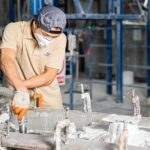


The solid surface manufacturing industry has changed considerably as manufacturers adopt modern equipment, improved material formulations, and more efficient production methods. Solid surface materials are widely used in kitchen countertops, bathroom vanities, commercial reception desks, wall panels, and customized furniture because of their versatility and attractive appearance. As international demand increases, manufacturers must focus on product consistency, production efficiency, and the ability to meet different customer requirements.
China has become an important manufacturing center for solid surface products, supported by its industrial infrastructure and growing investment in production technology. Companies operating in the Solid Surfaces China sector increasingly rely on advanced machinery, automated processes, digital quality monitoring, and material research to improve their manufacturing capabilities. These developments influence not only how products are made but also how manufacturers respond to changing expectations in the global construction and interior design markets.
1. Modernizing Solid Surface Production Processes
Traditional manufacturing methods often require significant manual involvement, particularly during material preparation, molding, cutting, and finishing. Although skilled workers remain important, modern production systems can improve accuracy and reduce unnecessary variations.
Advanced manufacturing equipment helps control important production parameters, including material proportions, mixing conditions, curing temperatures, and processing times.
A more standardized production process can provide several advantages:
- Improved product consistency
- Reduced material waste
- Better control over sheet dimensions
- More predictable production schedules
- Increased manufacturing efficiency
- Lower risk of certain production defects
By combining experienced personnel with modern machinery, manufacturers can produce solid surface materials more consistently while maintaining flexibility for different product requirements.
2. Automation in Material Mixing and Preparation
Material preparation is one of the most important stages in solid surface manufacturing. The final product typically contains resin, mineral fillers, pigments, and other additives. The quality of the mixture directly affects the material’s appearance and physical characteristics.
Automated weighing and dosing systems can improve accuracy when measuring raw materials. These systems help manufacturers maintain consistent formulations and reduce errors associated with manual measurement.
Modern mixing equipment can also support more uniform distribution of fillers and pigments throughout the material.
Another important development is the use of vacuum mixing or deaeration systems. These technologies help remove trapped air from mixtures, reducing the possibility of unwanted bubbles and voids in the finished product.
Accurate material preparation provides a foundation for reliable production throughout subsequent manufacturing stages.
3. Advanced Molding and Casting Technologies
Molding and casting methods determine the shape, dimensions, and surface characteristics of solid surface products.
Modern production facilities may use improved molds, controlled casting systems, and specialized equipment to support consistent product formation.
Precision-controlled molding can help manufacturers produce sheets with more uniform thickness and surface characteristics. It can also support customized shapes and components for applications such as vanity tops, sinks, and furniture elements.
The choice of molding technology depends on the product formulation, production volume, and required specifications.
For manufacturers handling multiple product categories, flexible molding systems can make it easier to adjust production according to different customer requirements.
4. Temperature Control and Curing Technology
Curing is an essential part of solid surface production because it influences how the resin system develops its final properties.
Inconsistent curing conditions can contribute to defects or variations in material performance. For this reason, manufacturers use controlled heating systems, temperature monitoring devices, and standardized processing procedures.
Modern temperature control technology helps maintain more stable conditions throughout the curing process.
Important factors include:
- Temperature uniformity
- Heating and cooling rates
- Curing duration
- Material formulation
- Production environment
- Equipment calibration
Accurate monitoring allows manufacturers to identify unusual process variations and make adjustments when necessary.
However, curing requirements differ between formulations, so production parameters must be developed and validated for the specific material being manufactured.
5. Computer-Controlled Cutting and Processing Equipment
After curing, solid surface sheets may need to be cut, shaped, or prepared for further fabrication.
Computer numerical control (CNC) machines have become valuable tools for manufacturers and fabricators that require accurate and repeatable processing.
CNC equipment can perform operations such as:
- Cutting sheets to specified dimensions
- Creating curved profiles
- Producing openings for sinks and fixtures
- Routing edges and grooves
- Manufacturing customized components
- Preparing complex decorative shapes
Digital design files can guide cutting operations, helping reduce measurement errors and material waste.
For customers ordering customized solid surface products, computer-controlled processing can also improve the accuracy of repeated designs.
6. Robotics and Automated Material Handling
Handling large solid surface sheets can be challenging because products may be heavy, bulky, and vulnerable to scratches or edge damage.
Automated handling systems can help manufacturers move materials between different production stages with greater consistency.
Depending on the facility, these systems may include robotic arms, vacuum lifting devices, conveyor systems, and automated storage equipment.
Potential benefits include:
- Reduced manual handling
- More controlled material movement
- Improved workplace efficiency
- Lower risk of handling-related damage
- Better coordination between production stages
Automation does not eliminate the need for trained employees. Workers still need to supervise equipment, inspect products, and manage situations that require judgment or specialized knowledge.
7. Digital Quality Inspection and Defect Detection
Quality inspection is essential for maintaining consistent solid surface products. Traditional inspection often relies heavily on visual checks and manual measurements.
Modern inspection technologies can support these activities through digital measuring instruments, optical scanning, and automated defect detection systems.
Depending on the equipment, manufacturers may use digital tools to identify:
- Surface scratches
- Uneven coloration
- Dimensional deviations
- Thickness variations
- Surface irregularities
- Manufacturing defects
Digital records also make it easier to compare inspection results across different production batches.
For international customers, documented inspection procedures provide useful evidence that products have been checked against agreed specifications.
However, automated inspection systems should complement rather than replace appropriate technical testing and trained quality personnel.
8. Artificial Intelligence and Data-Driven Manufacturing
Artificial intelligence and data analytics are becoming increasingly relevant across manufacturing industries.
In solid surface production, data-driven systems may help manufacturers analyze equipment performance, identify recurring defects, and optimize process settings.
For example, production monitoring systems can collect information about mixing conditions, temperature changes, machine operating times, and inspection results.
When enough reliable data is available, analytical tools can help identify patterns associated with production problems.
Potential applications include:
- Predicting equipment maintenance requirements
- Identifying unusual production variations
- Monitoring product quality trends
- Improving production scheduling
- Reducing avoidable material waste
- Supporting process optimization
AI-based manufacturing applications are still developing, and their effectiveness depends on data quality, equipment integration, and appropriate human supervision.
9. Improving Surface Finishing and Polishing Technology
Surface finishing has a major influence on the appearance and usability of solid surface products.
Different applications may require matte, satin, or high-gloss finishes. Achieving a consistent result requires appropriate sanding materials, polishing equipment, and controlled procedures.
Modern finishing systems can help manufacturers maintain more uniform surface characteristics across large production batches.
Automated sanding and polishing equipment may also improve processing consistency and reduce repetitive manual work.
However, finishing quality still depends on the material formulation, abrasive selection, machine settings, and operator expertise.
Manufacturers should establish finishing specifications according to the intended application and provide clear recommendations for maintaining the finished surface.
10. Technology for Customized Solid Surface Designs
Interior design projects increasingly require materials that support distinctive shapes, colors, and integrated components.
Advanced manufacturing technologies allow manufacturers to respond to these requirements with greater flexibility.
For example, CNC machining can create precise cutouts and decorative profiles, while thermoforming equipment can shape suitable solid surface materials into curved components.
Digital design software also helps manufacturers review product dimensions and prepare production files before manufacturing begins.
Customization may include:
- Special sheet dimensions
- Project-specific colors
- Curved countertops
- Integrated sink components
- Decorative edge profiles
- Customized furniture elements
- Branded or private-label products
The available options depend on the manufacturer’s material range, equipment, and technical expertise. Buyers should confirm the feasibility of customized designs before approving production.
11. Digital Production Management and Supply Chain Coordination
Manufacturing efficiency depends on more than machinery. Production planning, inventory management, purchasing, and delivery coordination also influence how effectively a factory operates.
Digital management systems can help manufacturers coordinate these activities.
For example, enterprise resource planning (ERP) systems can connect purchasing, inventory, production schedules, quality records, and order management.
This integration can provide better visibility into material availability and manufacturing progress.
Digital systems may help manufacturers:
- Track raw material inventory
- Schedule production orders
- Monitor manufacturing progress
- Coordinate quality inspections
- Manage customer specifications
- Prepare shipment information
- Improve communication between departments
For overseas buyers, better production management can support clearer order updates and more reliable delivery planning.
12. Technology and Sustainable Manufacturing Practices
Environmental performance is becoming an important consideration in global material manufacturing.
Advanced production technologies can contribute to more efficient resource use when properly implemented.
Examples include energy-efficient machinery, optimized cutting systems, improved material dosing, and better waste collection procedures.
Digital production monitoring may also help identify opportunities to reduce unnecessary energy consumption and material losses.
Other relevant initiatives include:
- Recycling suitable production waste
- Improving raw material utilization
- Reducing packaging waste
- Monitoring energy consumption
- Using more efficient production equipment
- Improving factory environmental management
Technology alone does not guarantee sustainable manufacturing. Manufacturers also need measurable environmental objectives, appropriate waste management practices, and transparent reporting.
13. The Role of Research and Development
Research and development helps manufacturers improve existing products and explore new material possibilities.
In the solid surface industry, R&D activities may focus on resin formulations, mineral filler combinations, color development, surface finishes, and product performance.
Manufacturers may also investigate ways to improve fabrication characteristics, reduce production defects, and develop materials for specialized applications.
Laboratory testing is important during this process because new formulations need to be evaluated before they are introduced into regular production.
Areas of research may include:
- Improved stain resistance
- Better mechanical performance
- More consistent coloration
- Enhanced fabrication properties
- New decorative patterns
- Reduced environmental impact
- Product-specific performance improvements
A strong R&D process allows manufacturers to respond to changing market requirements while maintaining attention to product reliability.
14. How Advanced Technology Benefits International Buyers
Manufacturing technology can influence the purchasing experience for distributors, contractors, architects, and furniture producers.
When properly managed, modern production systems can improve several aspects of international sourcing.
More consistent products: Standardized processes and digital inspection can help reduce variations between sheets.
Greater customization: CNC equipment and digital design systems support more complex shapes and project-specific specifications.
Improved production efficiency: Automated operations can reduce processing delays and unnecessary material waste.
Better quality documentation: Digital records can make inspection results and production information easier to organize.
More predictable orders: Integrated production management can improve scheduling and communication.
However, buyers should evaluate the actual capabilities of each manufacturer rather than assuming that every Chinese factory uses the same technologies.
15. What Buyers Should Check When Evaluating Technological Capabilities
A supplier’s investment in advanced equipment is useful only when it contributes to measurable manufacturing performance.
International buyers should therefore ask practical questions about how technology is used in production.
Consider checking the following:
- Production equipment: Does the factory use suitable mixing, molding, curing, cutting, and finishing machinery?
- Process monitoring: Are important manufacturing parameters recorded and controlled?
- Inspection methods: Does the company use reliable tools to check dimensions and surface quality?
- Technical expertise: Are employees trained to operate and maintain production equipment?
- Customization capabilities: Can the manufacturer produce the required designs and dimensions?
- Maintenance procedures: Are machines regularly inspected and calibrated?
- Product testing: Can the supplier provide relevant technical data and laboratory reports?
Factory photographs, production videos, technical documents, and independent inspections can help verify these capabilities.
16. Future Technological Trends in China’s Solid Surface Industry
The development of manufacturing technology is likely to continue influencing the solid surface industry.
Several areas may receive greater attention as manufacturers seek to improve productivity and respond to more demanding customer requirements.
These include smarter production monitoring, advanced automation, more precise digital fabrication, improved inspection systems, and data-driven maintenance.
Manufacturers may also continue exploring material formulations that provide better performance, more design options, or improved environmental characteristics.
Integration between digital design and factory production could make customized products easier to develop and manufacture.
The pace of adoption will vary between companies, depending on investment capacity, technical expertise, customer demand, and production priorities.
Conclusion
Advanced technology plays an increasingly important role in China’s solid surface manufacturing industry. Automated material preparation, precision molding, controlled curing, CNC processing, digital inspection, and modern production management systems can help manufacturers improve consistency, efficiency, and customization capabilities.
These technologies also create opportunities to develop new designs and respond to changing requirements in residential, commercial, and architectural projects. However, equipment investment alone does not guarantee high-quality products. Effective process management, skilled employees, reliable raw materials, and appropriate quality testing remain essential.
For international buyers, the best approach is to evaluate how a manufacturer applies technology throughout its production process. Reviewing equipment capabilities, inspection procedures, technical documentation, and product samples can provide a clearer understanding of manufacturing quality and help support informed sourcing decisions.