
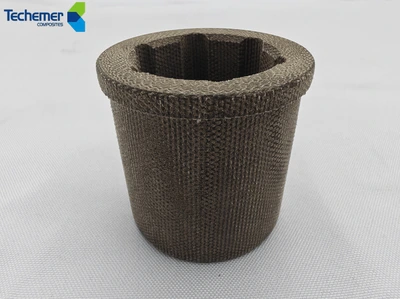

Modern hydropower facilities are expected to deliver reliable electricity while maintaining high equipment availability and controlling maintenance costs. As turbine-generator systems become more sophisticated, bearing technology continues to evolve to meet demanding operating requirements. Improvements in materials, lubrication systems, manufacturing precision, and condition monitoring are helping power plants improve mechanical reliability and manage equipment performance more effectively.
The development of advanced hydro turbine bearings is particularly important because bearings support rotating shafts, manage mechanical loads, and maintain alignment throughout turbine operation. New engineering approaches are making it possible to address challenges such as excessive friction, surface wear, vibration, contamination, and unplanned maintenance.
1. Advanced Materials for Improved Bearing Performance
Material innovation is one of the most important areas of bearing technology development. Bearing materials must withstand continuous loading, rotational movement, temperature changes, and exposure to lubricants or water.
Traditional materials remain widely used, but modern engineering has expanded the available options for specific hydropower applications.
Improved White-Metal Bearing Linings
White-metal alloys are commonly used in hydrodynamic bearing applications because of their conformability, compatibility with suitable shaft materials, and ability to support stable lubrication conditions.
Advances in manufacturing and bonding processes help improve lining consistency and component quality.
Engineered Polymer Composites
Specialized polymer composites are used in selected applications, particularly where water lubrication and corrosion resistance are important.
Depending on their formulation, these materials can offer suitable wear characteristics and reduced dependence on conventional oil-based lubrication.
Advanced Bronze Alloys
Bronze alloys continue to serve important roles in industrial bearing applications. Improvements in alloy composition and manufacturing can help achieve the mechanical properties required for particular operating environments.
Material selection must always consider the actual load, speed, lubrication method, and environmental conditions.
2. Development of Advanced Thrust Bearing Designs
Thrust bearings manage axial forces generated by turbine operation and the weight of rotating components.
In many vertical-shaft hydropower installations, their performance is critical to maintaining the correct position of the turbine-generator assembly.
Modern thrust-bearing designs focus on improving load distribution, lubrication stability, and thermal management.
Tilting-Pad Thrust Bearings
<AsyncImage query=”industrial tilting pad thrust bearing large hydroelectric generator” aspectRatio=”16:9″ width=”100%” maxHeight={190}/>
Tilting-pad thrust bearings use individual pads that can adjust their position to help establish a suitable lubricating film.
This design supports more uniform load distribution under appropriate operating conditions.
Improved Pad Materials and Geometry
Modern engineering methods allow manufacturers to refine pad geometry, surface finishing, and lining materials.
These improvements can help reduce localized loading and support reliable operation under demanding axial loads.
Better Thermal Management
Thrust-bearing performance depends on controlling heat generated during operation.
Improved oil distribution, cooling arrangements, and thermal monitoring help maintain suitable operating conditions.
3. Water-Lubricated Bearing Technology
Water-lubricated bearings are an important development area for selected hydropower applications.
Instead of relying on conventional lubricating oil, these systems use water as the lubricating and cooling medium.
<AsyncImage query=”water lubricated composite hydro turbine bearing industrial component” aspectRatio=”16:9″ width=”100%” maxHeight={190}/>
Specialized polymers and composite materials can be designed to operate in water-lubricated environments.
Potential advantages include:
- Reduced dependence on conventional lubricating oil
- Lower risk of oil leakage at the bearing interface
- Compatibility with selected wet operating environments
- Corrosion-resistant material options
- Simplified lubrication arrangements in suitable applications
However, water-lubricated bearings are not appropriate for every turbine. Water quality, suspended particles, load capacity, rotational speed, and startup conditions must be evaluated before selecting this technology.
4. Precision Manufacturing and Improved Surface Engineering
Bearing performance depends heavily on dimensional accuracy and surface quality.
Small variations in clearances, geometry, or surface finish can influence lubrication, friction, and load distribution.
Modern manufacturing technologies help improve consistency throughout the production process.
Computer Numerical Control Machining
CNC machining allows manufacturers to produce bearing components with controlled dimensions and repeatable geometries.
This is particularly important for large or specialized components that require accurate fitting.
Precision Grinding and Finishing
Grinding and advanced finishing processes help achieve the surface characteristics required for suitable bearing operation.
Consistent surface quality can support lubricant film formation and reduce the risk of premature wear.
Advanced Inspection Methods
Coordinate measuring equipment, dimensional scanning, and other inspection technologies help verify component accuracy.
These methods can identify manufacturing deviations before components are installed in turbine-generator assemblies.
5. Smart Sensors and Intelligent Bearing Monitoring
Digital monitoring is changing how hydropower facilities assess bearing condition.
Instead of depending only on scheduled physical inspections, operators can use sensors to track important operating parameters continuously or at selected intervals.
<AsyncImage query=”industrial bearing condition monitoring vibration temperature sensors turbine generator” aspectRatio=”16:9″ width=”100%” maxHeight={190}/>
Common monitoring measurements include:
- Bearing temperature
- Vibration levels
- Shaft displacement
- Lubrication pressure
- Oil temperature
- Rotational speed
These measurements help maintenance teams identify abnormal operating patterns.
Real-Time Temperature Monitoring
Temperature sensors can detect unusual heat generation that may be associated with lubrication problems, excessive loads, or increased friction.
Vibration Analysis
Vibration monitoring provides information about rotor balance, alignment, and possible bearing deterioration.
Shaft Position Monitoring
Displacement sensors help track shaft movement and identify changes in radial or axial positioning.
The value of monitoring comes from interpreting these measurements together rather than treating each reading as an isolated indicator.
6. Artificial Intelligence and Predictive Maintenance
Artificial intelligence and data analysis are increasingly being explored for industrial equipment maintenance.
In hydropower facilities, these technologies can help analyze historical and real-time operating information to identify patterns that may indicate developing mechanical problems.
Potential applications include:
- Detecting unusual temperature trends
- Identifying changes in vibration behavior
- Comparing current performance with historical data
- Supporting maintenance scheduling
- Identifying recurring operating abnormalities
Predictive maintenance tools may help engineers prioritize inspections and reduce unnecessary maintenance interventions.
However, AI-based systems depend on reliable sensor data, suitable models, and engineering validation. They should support rather than replace established inspection procedures and technical judgment.
7. Improved Lubrication and Cooling Systems
Lubrication technology continues to develop alongside bearing design.
An effective lubrication system must deliver the correct lubricant, at the required pressure and flow rate, while maintaining suitable temperature and cleanliness.
Modern systems may incorporate:
Improved Filtration
Advanced filtration helps remove particles that could damage bearing surfaces.
Maintaining lubricant cleanliness is particularly important in large turbine-generator assemblies that operate continuously.
Better Oil Distribution
Improved oil passages and distribution arrangements help deliver lubricant to the necessary bearing surfaces.
Consistent supply supports the development of a stable lubricating film.
Advanced Cooling Arrangements
Oil coolers and temperature-control systems help manage heat generated during bearing operation.
Maintaining suitable lubricant temperature supports its intended viscosity and performance.
8. Improved Sealing and Contamination Protection
Contamination can significantly reduce bearing service life.
Water, dust, metal particles, and other foreign materials may enter bearing assemblies and interfere with lubrication.
Modern sealing approaches aim to improve protection while maintaining the required operating clearances and component movement.
Depending on the bearing arrangement, protective technologies may include:
- Labyrinth seals
- Specialized contact seals
- Improved housing designs
- Protective covers
- Enhanced drainage arrangements
The appropriate solution depends on shaft speed, temperature, lubrication method, and exposure to moisture or contaminants.
9. Advanced Bearing Design Through Computer Simulation
Computer-aided engineering tools help designers evaluate bearing behavior before manufacturing and installation.
Simulation methods can be used to study load distribution, temperature patterns, lubrication behavior, and structural stresses.
Finite Element Analysis
Finite element analysis helps engineers evaluate how bearing components and supporting structures respond to applied forces.
It can assist in identifying areas of high stress or potential deformation.
Computational Fluid Dynamics
Computational fluid dynamics can be used to study lubricant flow, heat transfer, and fluid behavior in suitable bearing and lubrication arrangements.
Design Optimization
Simulation results can help engineers compare design alternatives and refine component geometry.
These tools do not eliminate the need for physical testing, but they can improve the design process and support more informed engineering decisions.
10. Innovations in Corrosion and Wear Protection
Hydropower equipment operates in environments where moisture and water exposure may affect bearing components.
Corrosion protection and wear resistance are therefore important considerations in modern bearing engineering.
Potential approaches include:
- Improved material selection
- Protective coatings
- Specialized surface treatments
- Corrosion-resistant composite materials
- Better sealing and contamination control
The effectiveness of each approach depends on the operating environment and compatibility with the bearing material.
For example, a coating suitable for one bearing arrangement may not be appropriate for another because of differences in contact conditions and lubrication requirements.
11. Modular Bearing Designs for Easier Maintenance
Maintenance accessibility is an important consideration in hydropower equipment design.
Large bearing assemblies can require specialized tools, lifting arrangements, and planned shutdown periods for inspection or replacement.
Modular design approaches can make selected components easier to inspect, service, or replace.
Potential benefits include:
- Easier access to individual components
- Simplified replacement procedures
- More manageable maintenance activities
- Reduced complexity during selected repairs
- Improved standardization of spare parts
Modular arrangements must still meet the required structural, dimensional, and operational specifications.
12. Innovations for Small and Large Hydropower Plants
Technology adoption differs according to plant capacity, equipment configuration, and available maintenance resources.
| Technology Area | Small Hydropower Plants | Large Hydropower Plants |
|---|---|---|
| Advanced materials | Application-specific polymer and metal bearings | Specialized materials for demanding loads |
| Condition monitoring | Selected sensors and basic monitoring systems | Integrated monitoring and data analysis |
| Lubrication | Simplified systems where appropriate | More extensive lubrication and cooling arrangements |
| Manufacturing | Standardized precision components | Custom-engineered and larger bearing assemblies |
| Maintenance | Practical inspection and replacement planning | Detailed condition-based maintenance programs |
| Simulation | Used where design complexity justifies it | Often valuable for complex bearing arrangements |
The most suitable innovation is the one that addresses the actual operating requirements and provides measurable engineering value.
13. How New Bearing Technologies Improve Hydropower Efficiency
Bearing technology contributes to power generation efficiency by supporting stable mechanical operation and limiting unnecessary losses.
Important contributions include:
Reduced friction: Suitable materials and lubrication arrangements help control energy losses within bearing interfaces.
Improved load distribution: Advanced geometries can help distribute forces more effectively across bearing surfaces.
Stable shaft positioning: Accurate bearing support helps maintain the alignment of rotating components.
Better thermal control: Improved lubrication and cooling reduce the risk of excessive operating temperatures.
Higher equipment availability: Reliable components and condition monitoring can help reduce unexpected shutdowns.
Bearing improvements are only one part of overall hydropower efficiency. Turbine hydraulic performance, generator condition, electrical systems, and operating practices also influence total energy production.
14. Challenges in Adopting New Bearing Technologies
Although modern bearing technologies offer useful opportunities, adopting them requires careful evaluation.
Some of the main challenges include:
- Higher initial costs for specialized components
- Compatibility with existing turbine assemblies
- Requirements for new monitoring equipment
- Need for trained maintenance personnel
- Availability of replacement materials and components
- Validation under actual operating conditions
A technology that works well in one installation may not deliver the same benefits in another.
Plant operators should evaluate lifecycle cost, technical suitability, installation requirements, and long-term maintenance implications before making changes.
15. Selecting a Reliable Bearing Technology Partner
Successful bearing implementation requires coordination between turbine engineers, maintenance teams, and component manufacturers.
Before selecting a bearing solution, professionals should review:
- Bearing dimensions and tolerances
- Radial and axial load requirements
- Operating speed
- Lubrication method
- Material specifications
- Manufacturing quality
- Inspection and testing documentation
- Technical support and replacement availability
Techemer provides information on industrial bearing applications that can help professionals explore component requirements and consider suitable solutions for hydropower equipment.
16. The Future of Hydro Turbine Bearing Technology
Future developments are likely to focus on improving material performance, digital monitoring, manufacturing accuracy, and maintenance efficiency.
Smart sensors may become more closely integrated with plant control and maintenance systems. Advanced materials may expand the range of applications for water-lubricated bearings. Improved simulation and manufacturing methods may also support more specialized bearing designs.
These developments will be most valuable when they address practical operating challenges and are supported by reliable engineering data.
Conclusion
Innovations in hydro turbine bearing technology are helping modern power generation facilities improve mechanical reliability and manage demanding operating conditions.
Developments in advanced materials, thrust-bearing designs, water lubrication, precision manufacturing, digital monitoring, and predictive maintenance are creating new opportunities for more dependable equipment operation.
However, technology alone does not guarantee improved performance. Correct bearing selection, accurate installation, suitable lubrication, and regular condition assessment remain essential.
By combining established engineering practices with carefully selected innovations, hydropower facilities can reduce maintenance risks, protect critical rotating components, and support reliable electricity generation over the long term.