
Family entertainment centers (FECs) are popular destinations for families looking for enjoyable activities, interactive attractions, and memorable experiences. From indoor play venues and amusement facilities to recreational centers and party venues, these businesses need entertainment options that appeal to different age groups while supporting efficient daily operations.
Inflatable attractions can be a valuable addition to these facilities. They offer opportunities for active play, friendly competition, group activities, and themed entertainment. Depending on the venue, operators can introduce bounce houses, obstacle courses, inflatable sports challenges, and interactive games to diversify their attractions.
However, choosing the right Inflatable Games for a family entertainment center requires more than selecting visually appealing products. Operators must consider available space, customer demographics, safety requirements, durability, maintenance, staffing, and long-term operating costs.
This practical guide explains how family entertainment centers can evaluate inflatable attractions, select suitable products, plan their layouts, and maintain equipment for reliable performance.
1. Why Inflatable Games Are Valuable for Family Entertainment Centers
Family entertainment centers often serve customers with different ages, interests, and expectations. Some visitors want physical challenges, while others prefer simple recreational activities or opportunities to play together.
Inflatable games can help operators accommodate these preferences when the attractions are carefully selected and appropriately managed.
Broader Entertainment Options
Adding inflatable attractions can diversify a venue’s existing activities. For example, a center that already offers arcade machines or party rooms might introduce an inflatable obstacle course or sports challenge to create another type of experience.
A varied attraction mix can help make the venue appealing to different customer groups.
Interactive Experiences
Many inflatables encourage guests to participate rather than remain spectators. Basketball shootouts, target games, and obstacle courses give visitors clear objectives and opportunities to improve their performance.
Interactive entertainment can also encourage repeat participation when activities offer different challenges or scoring formats.
Group and Party Activities
Inflatable attractions can support birthday parties, school visits, team-building sessions, and private group bookings. Certain games encourage teamwork and friendly competition, making them suitable for organized activities.
Operators should choose games that match the venue’s capacity and the age groups they intend to serve.
Flexible Entertainment Formats
Depending on the product, inflatables may be used for scheduled sessions, timed competitions, special events, or designated play periods.
This flexibility can help family entertainment centers develop different packages and activities without relying entirely on a single attraction type.
2. Popular Inflatable Games for Family Entertainment Centers
The most suitable attractions depend on the venue’s size, customer demographics, operating model, and installation conditions. The following options can help operators build a balanced entertainment offering.
Inflatable Obstacle Courses
Inflatable obstacle courses feature challenges such as tunnels, climbing sections, barriers, and slides, depending on the design.
They can appeal to older children, teenagers, and other eligible participants who enjoy active entertainment. Some courses are designed for individual completion, while others support competitive formats when the manufacturer permits them.
Before installation, confirm the course’s dimensions, ceiling clearance if indoors, participant restrictions, anchoring requirements, and operating capacity.
Inflatable Bounce Houses
Bounce houses are familiar attractions for younger visitors and children’s birthday parties.
They come in various sizes and themes, allowing operators to choose designs that complement the venue. However, the selected model must be appropriate for the intended users and fit the available installation area.
For family entertainment centers, clear age restrictions, supervision, and controlled entry are important parts of managing a bounce house.
Inflatable Sports Games
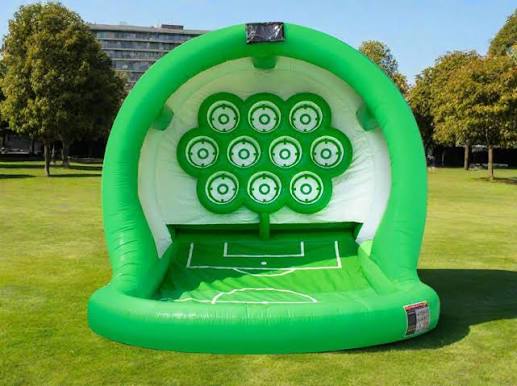
Sports-based inflatables can include basketball shootouts, soccer target challenges, football throwing games, and other skill-based attractions.
These activities can appeal to visitors who enjoy friendly competition without requiring a traditional sports court. Operators may organize short rounds or score-based challenges to encourage participation.
Select models that suit the intended audience and allow enough space for players, spectators, and queues.
Inflatable Interactive Games
Interactive inflatable games can combine physical activity with reaction challenges, target-based tasks, and other skill-oriented activities.
They may be suitable for venues seeking a variety of entertainment formats. Some designs are better suited to compact spaces, while others require larger installation areas.
Review the product’s operating requirements, power needs, maintenance procedures, and participant capacity before adding it to the venue.
Inflatable Slides
Inflatable slides can provide an engaging attraction for children and other age groups when the product is designed for their use.
Their height, access arrangements, landing area, and supervision requirements should guide the selection process. Indoor installations also require sufficient vertical clearance and approval for the intended setup.
Water slides require additional water-management arrangements and should only be considered where the venue and equipment are specifically suitable for that use.
Inflatable Team Games
Some inflatable attractions are designed around group participation, including human foosball and other team-based challenges.
These games can be useful for private bookings, corporate gatherings, and organized group sessions. Operators should verify the permitted number of participants and ensure the playing area supports the intended activity.
3. How to Choose the Right Inflatable Games for Your Venue
Selecting the right attractions begins with understanding how the venue operates and what customers expect.
Assess Your Target Audience
Review the age groups that visit your center most frequently. A venue serving primarily young children may prioritize bounce houses and simple interactive attractions, while a center attracting teenagers and adults may benefit from sports games and more challenging activities.
If your venue serves mixed-age groups, consider offering separate attractions or designated sessions where appropriate.
Always follow the manufacturer’s participant restrictions rather than assuming a game is suitable for everyone.
Measure the Available Space
Space planning is essential, particularly for indoor family entertainment centers.
Measure the usable floor area, ceiling height, entrances, exits, and access routes. Include the inflatable’s full dimensions, anchoring arrangements, required clearance, operator positions, and space for queues.
Outdoor venues must also account for ground conditions, weather exposure, drainage, and appropriate anchoring.
Do not select a product based solely on its advertised floor dimensions. The complete installation and operating area must fit the venue.
Evaluate Installation Requirements
Different inflatables have different installation needs. Some require continuous airflow from a blower, while others use sealed air chambers or specialized inflation systems.
Confirm electrical requirements, ventilation, anchoring methods, floor suitability, and setup procedures before purchasing or renting equipment.
For indoor venues, check whether the building owner permits inflatable installations and whether the proposed setup complies with applicable building and fire safety requirements.
Consider Guest Capacity
A popular attraction can create long queues if it accommodates only a small number of participants at a time.
Compare the expected visitor volume with each game’s permitted capacity and typical session length. If necessary, choose multiple attractions or distribute guests across different activity zones.
Never increase occupancy beyond the manufacturer’s limits to reduce waiting times.
4. Indoor vs. Outdoor Inflatable Games for Family Entertainment Centers
The venue environment can influence both the attraction selection and the operating process.
Indoor Inflatable Games
Indoor attractions may offer greater protection from outdoor weather and can be convenient for facilities operating throughout the year.
Suitable options may include compact bounce houses, sports challenges, and appropriately sized obstacle courses. However, operators must verify ceiling height, floor suitability, ventilation, electrical access, and required clearance.
Indoor locations are not automatically safer or more suitable. The building and equipment must meet the relevant operating requirements.
Outdoor Inflatable Games
Outdoor inflatables may provide more flexibility for larger structures and multiple activity areas.
They can be useful for seasonal entertainment, outdoor family centers, and special events. However, operators must monitor weather conditions and follow the manufacturer’s wind, rain, and temperature restrictions.
Outdoor installations also require suitable ground conditions, approved anchoring, and appropriate drainage where necessary.
Making the Right Choice
Choose the environment that best accommodates the product’s design and the venue’s operating requirements. Some inflatables can be used in multiple settings, but only when the manufacturer permits the intended installation.
If a venue operates both indoors and outdoors, maintain separate setup procedures and verify suitability for each location.
5. Safety Requirements for Inflatable Games
Safety should be a central consideration when introducing inflatable attractions into a public entertainment venue.
Family entertainment centers may experience frequent use, changing visitor numbers, and mixed-age groups. These conditions make consistent operating procedures particularly important.
Follow Manufacturer Instructions
Keep the manufacturer’s instructions accessible to staff. These should cover installation, anchoring, inflation, operating limits, supervision, shutdown procedures, and maintenance.
Review the specific restrictions for each attraction rather than applying the same assumptions to every inflatable.
Establish Clear Participant Rules
Display or communicate relevant age, height, weight, and capacity restrictions where applicable.
Explain how participants should enter, exit, and use the attraction. Rules should also address prohibited behavior, such as pushing, unsafe climbing, or interfering with other users.
Provide Appropriate Supervision
Assign trained personnel to attractions according to their design, risk level, and operating requirements.
Staff should know how to manage queues, monitor participant behavior, recognize equipment problems, and stop the activity when conditions become unsuitable.
Inspect Equipment Regularly
Inspect the inflatable before every operating session and follow the manufacturer’s schedule for more detailed checks.
Pay attention to seams, fabric, anchoring points, blower connections, protective features, and other components relevant to the product.
Remove damaged equipment from service until it has been properly assessed and repaired.
Prepare Emergency Procedures
Develop procedures for power interruptions, equipment failure, adverse weather, injuries, and other foreseeable incidents.
Train staff to communicate clearly and follow the venue’s emergency response plan. Keep exits and access routes unobstructed.
Applicable regulations, insurance requirements, and local safety standards should also be reviewed before the attraction opens to the public.
6. Maintenance Strategies for Long-Term Performance
Regular maintenance can help family entertainment centers protect their investment and reduce avoidable interruptions.
Daily Cleaning
Clean surfaces according to the manufacturer’s instructions and the venue’s hygiene procedures. Pay attention to frequently touched areas, entrances, and surfaces where dirt accumulates.
Use compatible cleaning products and avoid chemicals that could damage coatings, fabric, or printed designs.
Routine Equipment Inspections
Create a checklist for each attraction. Include visible material damage, seam condition, anchor points, inflation equipment, accessories, and safety features.
Record inspection results and remove equipment from service when a problem requires further assessment.
Correct Drying and Storage
For portable inflatables, remove dirt and allow the equipment to dry completely before folding and storage.
Store equipment in a clean, dry area protected from excessive heat, sunlight, moisture, and pests. Follow the manufacturer’s folding and storage instructions.
Permanent or frequently installed attractions should be maintained according to their specific construction and service requirements.
Blower and Electrical Maintenance
Where applicable, inspect blowers, cables, plugs, switches, air tubes, and connections.
Keep ventilation openings clear and protect electrical components from moisture. Repairs involving electrical systems should be handled by qualified professionals.
Professional Servicing
Arrange professional inspection or repair when required by the manufacturer, applicable regulations, or the condition of the equipment.
Maintain records of servicing, repairs, replacement parts, and recurring problems. These records can help managers make informed decisions about continued use or replacement.
7. Budgeting for Inflatable Games in a Family Entertainment Center
The cost of introducing inflatable attractions extends beyond the purchase price.
Operators should estimate the total cost of ownership, including installation, transportation, electricity, staffing, cleaning, maintenance, storage, repairs, and any applicable permits or insurance.
Initial Purchase Costs
The initial cost depends on the attraction’s size, materials, construction, features, and customization requirements.
Compare specifications carefully rather than assuming that the lowest-priced product offers the best long-term value.
Operating Expenses
Recurring costs may include staff time, cleaning supplies, electricity, inspections, and equipment servicing.
Larger or more complex attractions may require more space, staffing, and maintenance resources.
Replacement and Downtime Costs
A damaged attraction may need to be taken out of service, potentially reducing the venue’s available entertainment options.
Regular inspections and preventive maintenance can help identify problems earlier, although they cannot eliminate every repair or breakdown.
Evaluate Long-Term Value
When comparing products, consider durability, intended usage frequency, warranty coverage, repair support, replacement-part availability, and expected operating requirements.
The best investment is not necessarily the largest inflatable. It is the attraction that fits the venue, serves its customers, and can be operated and maintained appropriately.
8. How Inflatable Games Can Support Revenue Opportunities
Inflatable attractions can create additional opportunities for family entertainment centers when incorporated into a well-planned business model.
Birthday Party Packages
Operators can include suitable inflatable activities in birthday party packages alongside reserved spaces, refreshments, and other entertainment.
Packages should clearly describe which attractions are included, participant restrictions, session lengths, and supervision arrangements.
Group and School Bookings
Certain inflatables may be suitable for school outings, youth groups, and organized celebrations.
Team-based activities can provide a structured entertainment option, provided the attraction’s capacity and intended use match the group.
Corporate Events
Some centers can offer suitable team challenges for company gatherings and private group bookings.
Games that encourage communication and friendly competition may be useful for these events, depending on the audience and venue.
Special Events and Promotions
Seasonal activities, themed celebrations, and short competitions can help introduce customers to attractions they have not tried before.
However, promotional activities should not compromise participant limits, staffing requirements, or safe operating procedures.
Monitor Performance
Track attendance, utilization, queue times, maintenance costs, and customer feedback for each attraction.
This information can help managers identify popular games, improve scheduling, and determine whether an attraction continues to meet the venue’s needs.
Revenue outcomes will vary according to pricing, demand, operating costs, location, and the overall customer experience.
9. Design an Effective Inflatable Game Layout
A well-designed layout can improve customer movement and help staff supervise attractions effectively.
Separate Activities by Age and Intensity
Where possible, group attractions according to their intended audience and activity level.
Younger children’s equipment may need a designated area, while more physically demanding attractions may require separate space and operating procedures.
Follow the manufacturer’s rules about participant combinations and separation.
Keep Entrances and Exits Clear
Avoid placing queues, seating, or merchandise in areas needed for access or emergency movement.
Each inflatable should have the clearance required by its manufacturer and the applicable venue rules.
Position Staff Strategically
Place staff where they can monitor participant entry, activity, and exit as required. Larger or more complex attractions may need additional supervision.
Ensure that staff can communicate with one another and access the equipment’s controls when necessary.
Balance High-Demand Attractions
If one game attracts most visitors, nearby activities may become underused while queues grow.
Consider spreading attractions across the available area and providing alternative activities for guests waiting to participate.
10. How to Select a Reliable Inflatable Game Supplier
Supplier selection can influence product quality, installation planning, and long-term maintenance.
Review Product Specifications
Request detailed information about materials, dimensions, participant limits, installation requirements, and intended applications.
Confirm that the product is suitable for the venue and expected frequency of use.
Ask About Quality Control
Ask the supplier or manufacturer what inspections and testing procedures are conducted during production.
Request relevant documentation for the product and verify any claims about certifications or compliance with applicable standards.
Evaluate After-Sales Support
Check whether the supplier provides operating instructions, maintenance guidance, approved repair materials, replacement components, and technical assistance.
For commercial operators, access to appropriate support can be especially important when equipment is used frequently.
Review Warranty Terms
Understand what the warranty covers, its duration, exclusions, and the process for reporting defects.
Also confirm whether particular cleaning products, repairs, or operating practices could affect coverage.
Compare Products Against Your Needs
Do not choose an attraction based only on appearance or advertised features. Compare the total cost, space requirements, operating restrictions, maintenance needs, and suitability for your customer base.
If you are researching different product options, browse the available Inflatable Games to review designs that may suit family entertainment centers, recreational venues, and event businesses.
Conclusion
Inflatable games can help family entertainment centers diversify their attractions, encourage active participation, and create additional options for birthday parties, group bookings, and special events. Bounce houses, obstacle courses, sports challenges, interactive games, and team activities can each serve different customer needs.
Choosing the right equipment requires careful attention to venue space, audience demographics, installation requirements, safety procedures, maintenance, and total operating costs. A well-planned attraction mix can support a more organized customer experience while helping operators make informed investment decisions.
Before purchasing, review the manufacturer’s specifications, quality-control information, warranty, and after-sales support. Establish clear operating procedures and consistent maintenance routines once the equipment is installed.
With thoughtful planning and responsible management, inflatable attractions can become a useful part of a family entertainment center’s long-term offering. Explore different Inflatable Games to compare possible options and identify products that align with your venue’s space, audience, and business objectives.