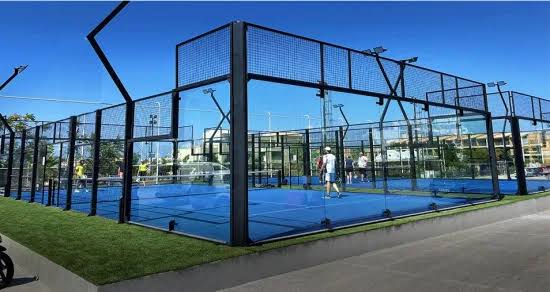

Investing in padel courts involves decisions that can affect a sports facility for many years. The court needs to withstand frequent matches, repeated player movement, changing weather conditions, and ongoing maintenance. For clubs, hotels, fitness centers, and dedicated padel businesses, selecting a suitable supplier is therefore an important part of the development process. Looking beyond the initial quotation can help buyers understand what they are actually receiving for their investment.
When comparing a China Padel Court Manufacturer, buyers should examine much more than photographs and advertised prices. Manufacturing experience, material specifications, engineering, customization, production consistency, packaging, technical support, and replacement parts can all influence the practical value of a court. A structured evaluation makes it easier to identify a supplier whose capabilities match the requirements of the project.
Define the Project Before Contacting Suppliers
A clear project brief makes supplier communication much easier.
Start by determining how many courts you need, where they will be installed, whether they will be indoor or outdoor, and how frequently they are expected to operate.
You should also consider whether the venue will be primarily recreational, commercial, competitive, or hospitality-focused.
Other useful details include:
- Available installation area
- Local weather conditions
- Expected daily usage
- Lighting requirements
- Preferred court colors
- Branding requirements
- Installation arrangements
- Target completion date
Having these details ready allows manufacturers to provide more relevant specifications and quotations.
Investigate Manufacturing Capabilities
Not every company selling padel courts necessarily has the same manufacturing capabilities. Some may manufacture major structural components themselves, while others may source parts from different suppliers.
Ask about the production process and which components are manufactured in-house.
You can also request information about factory facilities, equipment, production capacity, quality-control procedures, and previous projects.
This information helps you understand how much control the supplier has over the final product.
Look at Engineering Rather Than Appearance
Court photographs are useful for understanding design, but they do not reveal everything about construction quality.
A court can look impressive while still having weaknesses that are not visible in photographs.
Ask for technical drawings and specifications covering the structure, glass, fencing, anchoring, turf, and other major components.
Engineering details can reveal how the court is designed to handle regular loads, environmental exposure, and installation requirements.
Examine Connection Points
Individual components may be strong, but the way they connect can also influence overall stability.
Pay attention to structural joints, bolts, brackets, welding, anchors, and other connection points.
These areas should be designed for reliable assembly and appropriate load distribution.
For buyers, the important question is not simply whether the frame is made from strong steel. It is whether the complete structural system has been designed and manufactured properly.
Investigate Surface Treatments
Metal components are exposed to environmental conditions, particularly when courts are installed outdoors.
Ask how steel surfaces are prepared and protected against corrosion. Surface preparation, galvanization, powder coating, or other protective systems may be used depending on the product design.
The intended installation environment should always be considered.
A court located in a humid or coastal region may require different corrosion-protection considerations from one installed in a dry inland area.
Review Glass Handling Procedures
Glass is among the components that require the most careful handling.
Ask the supplier how glass is processed, inspected, packaged, and secured for transportation.
You should also clarify how replacement panels are supplied if damage occurs after installation.
For large commercial facilities, knowing the availability and lead time of replacement glass can be useful for minimizing potential interruptions.
Compare Turf Options Carefully
Artificial turf is available in different specifications and configurations.
Instead of choosing solely based on color or appearance, ask about fiber characteristics, density, backing, drainage, maintenance, and expected wear.
The appropriate turf may depend on the intensity of court usage and whether the installation is indoors or outdoors.
Commercial operators should pay particular attention to maintenance because heavily used courts can require more frequent cleaning and surface care.
Evaluate Lighting as a Complete System
Lighting should be assessed as part of the entire court design.
Ask where fixtures will be positioned, how the light will be distributed, how the system is powered, and how maintenance will be carried out.
The goal is to provide players with consistent visibility across the court while avoiding unnecessary glare.
If the facility will operate for long hours, energy efficiency and replacement costs should also be considered.
Ask for Production Samples or References
When possible, review examples of completed projects.
Photographs can show how courts look after installation, while references can provide insight into the supplier’s communication, delivery process, and technical support.
If the manufacturer has supplied multiple courts to the same facility, this may also demonstrate its ability to manage larger projects.
The purpose of reviewing references is not simply to find attractive courts. Look for evidence that the supplier can consistently deliver the specifications promised.
Understand Production Timelines
Manufacturing time can influence the entire construction schedule.
Ask when production can begin, how long fabrication is expected to take, and when the courts can be packed and dispatched.
For projects with a planned opening date, allow sufficient time for shipping, customs clearance where applicable, site preparation, and installation.
It is also useful to confirm which factors could cause delays and how schedule changes are communicated.
Check Packaging and Container Loading
International transportation can involve considerable handling before the equipment reaches the installation site.
Ask how the manufacturer organizes and protects components during shipping.
Steel sections should be securely packed, smaller hardware should be clearly organized, and glass requires specialized protection.
A detailed packing list can help the receiving team check whether all components have arrived before installation begins.
Clarify the Installation Process
Installation requirements should be established before production starts.
Some projects use the manufacturer’s installation team, while others rely on local contractors.
If local contractors will handle installation, ask whether the manufacturer supplies:
- Technical drawings
- Foundation specifications
- Assembly instructions
- Component identification
- Installation videos
- Technical consultation
Clear documentation can help local teams understand the manufacturer’s intended assembly process.
Calculate More Than the Purchase Price
The quoted price is only one part of the financial picture.
A buyer should consider all major project expenses, including:
- Court manufacturing
- Customization
- Packaging
- International freight
- Local transportation
- Foundation preparation
- Installation
- Electrical work
- Drainage
- Future maintenance
This broader calculation provides a better understanding of the actual investment required.
Ask About Replacement Components
Long-term operation inevitably involves wear and occasional damage.
A supplier should be able to explain how replacement components can be obtained.
Ask whether the manufacturer can supply individual items such as glass panels, turf, mesh sections, lights, fasteners, and structural components.
This can be especially important for commercial venues where keeping courts operational is a priority.
Study the Warranty Terms
A warranty can provide useful protection, but the details matter.
Check exactly what is covered and for how long. Understand whether different components have different warranty periods.
Also ask about the process for reporting a problem and whether the buyer is responsible for transportation or installation costs associated with warranty replacements.
Clear warranty terms are preferable to vague promises of long-term support.
Consider Communication Quality
International projects involve communication across different time zones, languages, and business practices.
Before placing an order, observe how quickly and clearly the manufacturer responds to technical questions.
Can the supplier explain specifications accurately? Are quotations detailed? Are production updates provided? Does the company document changes?
Good communication helps reduce misunderstandings and makes project coordination easier.
Plan for Expansion
A successful facility may eventually add more courts.
If future expansion is possible, ask whether additional courts can be manufactured to match the original design.
Using consistent frame colors, glass arrangements, fencing, turf, and lighting can help maintain a unified appearance as the facility grows.
It is also useful to consider future infrastructure requirements when preparing the original site.
Build a Maintenance Plan
A durable court still requires routine care.
Facility operators should establish procedures for inspecting the frame, cleaning glass, maintaining turf, checking mesh, inspecting fasteners, monitoring drainage, and servicing lights.
Ask the manufacturer for recommended maintenance intervals and cleaning methods.
Following a regular maintenance program can help operators identify minor problems before they become expensive repairs.
Final Thoughts
Evaluating a China-based padel court supplier requires a structured approach. The strongest comparison is not simply between two prices; it is between complete solutions that include engineering, materials, production, logistics, installation support, warranty, and long-term service.
Start by defining your project requirements, then ask each manufacturer for detailed technical information. Review the structural system, glass, turf, fencing, lighting, protective treatments, and installation requirements. At the same time, investigate production capacity, packaging, shipping, replacement parts, and after-sales communication.
For a commercial facility, these details can matter long after the initial purchase has been completed. A well-documented court system with appropriate materials and accessible support can make ongoing operation and maintenance easier.
By evaluating suppliers systematically and matching their capabilities to your specific project, you can approach the purchasing process with clearer expectations and a better understanding of the long-term requirements of your padel facility.
Frequently Asked Questions
How do I compare China padel court manufacturers?
Compare their manufacturing experience, technical specifications, materials, quality-control procedures, customization options, production capacity, shipping arrangements, installation support, warranty, and spare-parts availability.
What information should I request from a manufacturer?
Request detailed product specifications, technical drawings, quotations, production timelines, packaging information, installation requirements, warranty terms, and maintenance recommendations.
Is customization available for padel courts?
Many manufacturers provide customization options such as frame colors, branding, lighting configurations, fencing, and entrance designs. The available options vary between suppliers.
Why are spare parts important for a commercial padel facility?
Replacement glass, turf, lighting components, mesh, and hardware may eventually be needed. Reliable access to replacement parts can help reduce downtime when repairs are required.