
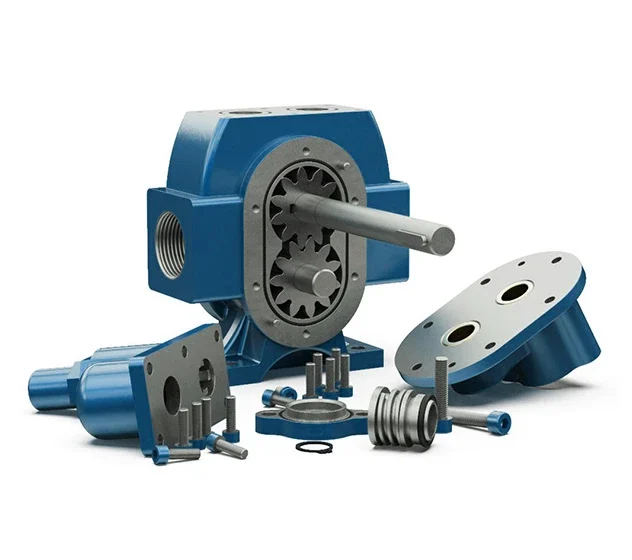

Gear pump technology has evolved alongside the changing requirements of hydraulic, industrial, chemical, lubrication, and fluid-transfer systems. Modern equipment increasingly demands improved efficiency, longer service life, compact designs, and greater compatibility with specialized operating conditions. These requirements continue to influence how gear pumps are designed, manufactured, and integrated into industrial machinery.
For buyers researching a gear pump manufacturer, understanding current developments in pump technology can provide useful context when comparing products. Innovations are not limited to the pump itself; they can involve materials, gear geometry, manufacturing processes, sealing systems, testing methods, and digital monitoring.
How Gear Pump Technology Is Evolving
Traditional gear pumps remain widely used because of their relatively straightforward construction and dependable positive displacement principle. However, modern applications often require pumps to perform within narrower efficiency and reliability targets.
Manufacturers are responding by refining component geometry, improving manufacturing accuracy, developing new material combinations, and optimizing pump designs for specific fluids and operating conditions.
The goal is generally to achieve better performance without unnecessarily increasing complexity.
Improved Gear Geometry
Gear geometry is one area where engineering improvements can influence pump performance. Gear tooth shape, profile, size, and engagement affect fluid displacement, mechanical losses, and operating noise.
Modern manufacturing techniques allow gear profiles to be produced with increasing precision. More accurate components can help control internal clearances and improve consistency between individual pumps.
Design changes may also focus on reducing pressure fluctuations and improving smooth fluid transfer.
Advanced Manufacturing Precision
Improved machining and measurement technologies have made it possible to control critical pump dimensions more accurately.
Computer-controlled machining, precision finishing, and modern inspection equipment can help manufacturers maintain consistent tolerances across components.
Greater manufacturing precision is particularly relevant to internal clearances. Excessive clearance can increase leakage, while insufficient clearance may increase friction and the risk of component interference.
Development of New Materials
Material technology continues to influence gear pump design. Conventional materials such as cast iron, steel, aluminum, stainless steel, and bronze remain useful, while specialized alloys and engineered materials can address more demanding applications.
Material selection can be optimized for properties such as:
- Corrosion resistance
- Wear resistance
- Mechanical strength
- Temperature resistance
- Weight reduction
- Fluid compatibility
The most advanced material is not necessarily the best choice. The appropriate material should match the application’s actual requirements.
Improved Surface Treatments
Surface treatment and finishing technologies can improve the characteristics of selected pump components.
Depending on the application, treatments may be used to increase surface hardness, reduce wear, improve corrosion resistance, or enhance friction characteristics.
These approaches can be particularly useful for gears, shafts, and other components exposed to repeated mechanical loading.
Better Sealing Technology
Sealing systems are another area of ongoing development. A seal must prevent leakage while remaining compatible with the pumped fluid, pressure, temperature, and shaft speed.
Modern applications may require specialized elastomer formulations or other sealing solutions to accommodate aggressive fluids or demanding temperatures.
Improved seal design can also contribute to longer maintenance intervals when the selected material and operating conditions are compatible.
Efficiency Improvements
Energy efficiency is becoming increasingly important across industrial equipment. Although gear pumps are mechanically simple, internal leakage and friction can result in energy losses.
Engineering improvements can focus on reducing unnecessary internal leakage while controlling friction between moving components.
Efficiency should always be considered in relation to the actual operating point. A pump optimized for one pressure, speed, and viscosity range may not deliver the same efficiency under different conditions.
Compact Pump Designs
Space and weight constraints are common in mobile and industrial equipment. This has encouraged the development of more compact pump configurations.
Compact designs can simplify integration into hydraulic systems and machinery, but reducing physical dimensions must not compromise required pressure capability, heat management, or serviceability.
Designers therefore need to balance size with mechanical strength and thermal performance.
Technology for High-Pressure Applications
Some modern hydraulic and industrial systems require gear pumps to operate at relatively high pressures. These applications place greater demands on housings, gears, shafts, bearings, and sealing systems.
Engineering improvements may involve stronger materials, optimized component geometry, improved support arrangements, and tighter manufacturing controls.
High-pressure operation also increases the importance of proper system protection and accurate pump sizing.
Handling More Challenging Fluids
Industrial processes can involve fluids with unusual viscosity, corrosive properties, abrasive particles, or elevated temperatures.
Pump technology is adapting through specialized material combinations, sealing options, internal clearances, and application-specific designs.
A pump intended for a challenging fluid should be evaluated as a complete system. Fluid composition, temperature, viscosity, contamination level, and pressure all influence the appropriate design.
Digital Monitoring and Condition Awareness
Industrial equipment is increasingly incorporating sensors and monitoring systems. While a traditional gear pump may operate without electronic controls, connected equipment can monitor conditions such as pressure, temperature, speed, and vibration.
This information can help maintenance teams identify changes in operating behavior.
Digital monitoring does not replace proper mechanical maintenance, but it can provide additional information for condition-based maintenance strategies.
Computer-Aided Engineering
Computer-aided design and engineering tools allow manufacturers to evaluate pump components before physical production.
Engineers can use digital models to examine component dimensions, mechanical stresses, fluid pathways, and design changes. Simulation can help identify potential issues during the development process.
Physical testing remains important, but digital engineering can reduce the number of design iterations required before production.
Automation in Manufacturing
Automation can improve repeatability in selected manufacturing and assembly processes. Automated or semi-automated operations may help maintain consistent positioning, machining, measurement, or assembly procedures.
However, automation should work alongside appropriate quality controls. Inspection and testing remain necessary to verify that completed pumps meet their intended specifications.
Improved Testing Methods
Modern pump testing can provide more detailed information about flow, pressure, leakage, temperature, efficiency, noise, and vibration.
Testing equipment can collect performance data under controlled conditions, allowing manufacturers to compare results against established specifications.
For specialized applications, testing can also be adapted to represent particular fluid properties or operating conditions.
Customization for OEM Equipment
Another important development is greater flexibility in application-specific pump design. Equipment manufacturers may require customized mounting dimensions, shafts, connections, materials, or performance characteristics.
Modern engineering and manufacturing methods can make such customization more practical than in the past.
However, every modification should be assessed carefully because changes to one component can affect the pump’s overall performance and durability.
Sustainability and Resource Efficiency
Environmental considerations are increasingly influencing industrial equipment design. For pumps, this can involve reducing energy consumption, improving service life, minimizing material waste, and making components easier to maintain or replace.
Longer service life can reduce the frequency of replacement and the resources required to manufacture new equipment.
Efficient manufacturing processes can also help reduce material waste and improve production utilization.
What These Innovations Mean for Buyers
Not every new technology is necessary for every application. Buyers should focus on whether an innovation provides a measurable benefit under their actual operating conditions.
When evaluating modern gear pump designs, consider:
- Expected flow and pressure
- Operating speed
- Fluid viscosity and composition
- Temperature range
- Required service life
- Energy efficiency
- Maintenance requirements
- Available monitoring capabilities
- Customization needs
- Total cost of ownership
This approach helps prevent buyers from selecting features that add complexity without providing meaningful value.
Balancing Innovation With Reliability
Innovation should support practical performance rather than simply introduce additional features. Gear pumps remain popular partly because their fundamental design is relatively simple and easy to integrate into many systems.
The most useful technological improvements are those that enhance reliability, efficiency, service life, manufacturing consistency, or application compatibility while preserving practical serviceability.
For industrial equipment, proven engineering combined with appropriate innovation can often provide the strongest overall solution.
Final Thoughts
Innovations in gear pump technology continue to improve how these pumps are designed, manufactured, tested, and integrated into industrial systems. Developments in gear geometry, materials, surface treatments, sealing, manufacturing precision, efficiency, monitoring, and customization can address increasingly demanding applications.
For buyers, the key is to evaluate technology according to actual operating requirements rather than choosing products based solely on advanced features. A well-engineered pump should provide the required flow and pressure while maintaining suitable efficiency, durability, compatibility, and serviceability throughout its intended operating life.
