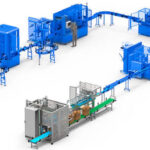
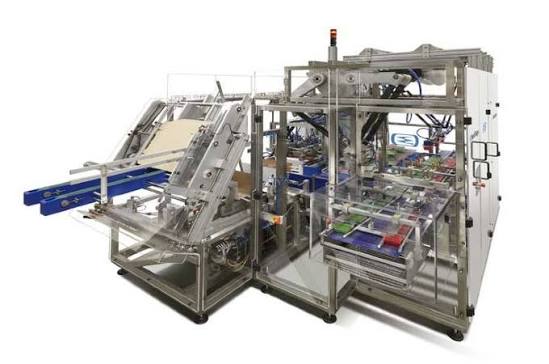

The packaging industry is continuously evolving as manufacturers look for better ways to improve production efficiency, reduce operating costs, and maintain consistent product quality. Increasing demand for automated manufacturing, sustainable packaging, and faster distribution has encouraged equipment developers to introduce new technologies into modern packaging systems. Wrap around packaging machines are also benefiting from these developments, becoming more flexible, intelligent, and efficient.
A modern Wrap Around Packer combines automated product grouping, cardboard feeding, case forming, folding, and sealing into a coordinated packaging process. As technology advances, these systems are expected to incorporate smarter controls, improved material handling, advanced monitoring, and more sustainable operating methods. Understanding these emerging trends can help manufacturers prepare their production lines for future packaging requirements.
1. Greater Integration of Smart Automation
Smart automation is expected to play an increasingly important role in the development of packaging machinery. Traditional automated systems already reduce manual operations, but newer technologies are making machines more responsive to changing production conditions.
Modern packaging equipment can incorporate programmable logic controllers, intelligent sensors, and advanced control interfaces. These technologies help coordinate different machine operations and provide operators with better control over production activities.
Future systems may offer more sophisticated automated adjustments, allowing machines to respond more efficiently to changes in product dimensions, packaging configurations, and operating conditions.
This development can help manufacturers reduce manual intervention while maintaining consistent packaging performance.
2. Artificial Intelligence and Machine Learning
Artificial intelligence (AI) and machine learning are emerging technologies with potential applications in industrial packaging operations.
These technologies can analyze operational data, identify performance patterns, and support more informed production decisions.
In wrap around packaging systems, potential applications include:
- Identifying unusual machine operating patterns.
- Detecting recurring packaging defects.
- Supporting predictive maintenance decisions.
- Analyzing production efficiency.
- Helping optimize machine operating parameters.
For example, intelligent monitoring software could analyze repeated equipment interruptions and help maintenance teams identify their underlying causes.
Although AI adoption in packaging machinery is still developing, its potential to improve equipment monitoring and operational decision-making is significant.
3. Advanced Sensor Technology
Sensors are essential for monitoring product movement, detecting packaging materials, and coordinating automated machine operations.
Future packaging systems are likely to use more advanced sensor technologies to improve accuracy and reliability.
Improved sensors can help detect incorrectly positioned products, missing cardboard blanks, feeding problems, and other irregularities during packaging.
More precise detection can reduce packaging errors and prevent certain problems from affecting subsequent production stages.
Combining multiple sensors with intelligent control systems may also allow machines to respond more quickly to unexpected operating conditions.
4. Increased Focus on Sustainable Packaging Materials
Environmental sustainability has become an important consideration for manufacturers and packaging suppliers. Businesses are exploring ways to reduce material consumption, minimize waste, and use packaging materials with lower environmental impacts.
Wrap around packaging systems are well positioned to support these efforts because they use flat cardboard blanks that are folded around grouped products.
Future developments may focus on improving machine compatibility with recycled corrugated materials, lightweight packaging boards, and alternative fiber-based materials.
However, sustainable materials must still provide sufficient strength, folding performance, and sealing reliability.
Manufacturers will need to balance environmental objectives with the protection and transportation requirements of their products.
5. Energy-Efficient Machine Designs
Energy efficiency is another important trend influencing industrial packaging equipment.
Manufacturers are increasingly interested in machinery that delivers reliable output while consuming fewer resources. Equipment developers are responding through improved drive systems, optimized mechanical movements, and more efficient control technologies.
Future wrap around packaging systems may incorporate:
- Energy-efficient motors.
- Improved motion-control technology.
- Optimized pneumatic systems.
- Automatic standby functions.
- Reduced unnecessary machine movements.
These improvements can help manufacturers manage electricity consumption and lower long-term operating expenses.
Energy-efficient designs may also contribute to more sustainable manufacturing operations.
6. Predictive Maintenance and Remote Monitoring
Traditional maintenance practices often depend on scheduled inspections or repairs after equipment problems occur. Predictive maintenance uses operating data to identify potential issues before they lead to major breakdowns.
Modern industrial machines can incorporate monitoring systems that collect information about operating conditions, machine cycles, and component performance.
In the future, more advanced wrap around packaging systems may use connected monitoring platforms to provide maintenance teams with detailed performance information.
Remote monitoring can also help technical personnel investigate certain machine problems without always requiring an immediate on-site inspection.
These capabilities can reduce troubleshooting time, support better maintenance planning, and improve equipment availability.
7. Improved Flexibility and Faster Changeovers
Manufacturers increasingly produce multiple product varieties to respond to changing customer preferences and market demand. This creates a need for packaging machines that can accommodate different product dimensions and carton configurations.
Future wrap around packers are expected to place greater emphasis on flexible machine designs and simplified changeover procedures.
Potential improvements include programmable product settings, adjustable mechanical guides, automated positioning, and easier configuration management.
These features can help reduce the time required to switch between production runs.
Greater flexibility is particularly valuable for manufacturers that handle different bottle sizes, container formats, or packaged consumer products on the same production line.
8. Digital Connectivity and Industry 4.0
Industry 4.0 is transforming manufacturing through the integration of connected machines, digital monitoring platforms, and data-driven production management.
Packaging equipment is becoming part of this broader industrial ecosystem.
Connected wrap around packaging systems may exchange information with production management software, warehouse systems, and other factory equipment.
This connectivity can help manufacturers monitor packaging output, identify workflow interruptions, and coordinate operations across different production stages.
Digital integration also supports better production planning by providing managers with more accurate information about machine performance and operating conditions.
9. Advanced Human-Machine Interfaces
Human-machine interfaces (HMIs) allow operators to interact with packaging equipment through control panels and digital displays.
As technology develops, these interfaces are expected to become more intuitive and informative.
Modern interfaces can provide machine status information, operating parameters, alarm notifications, and production data in an organized format.
Future improvements may include clearer visual instructions, multilingual interfaces, simplified troubleshooting guidance, and more detailed performance dashboards.
These developments can reduce the learning curve for new operators and make daily machine management more convenient.
10. Robotics and Automated Product Handling
Robotics is becoming increasingly important in modern manufacturing and packaging operations.
Robotic systems can perform tasks such as product picking, positioning, grouping, and transferring products between production stages.
When integrated with wrap around packaging equipment, robotic handling may help manufacturers manage products with different shapes and arrangements.
For example, robotic systems could support the accurate grouping of products before they enter the case-forming section.
The combination of robotics and automated case packaging may improve production flexibility while reducing repetitive manual handling.
11. Enhanced Safety and Operator Protection
Workplace safety will remain an important consideration in future packaging machine development.
Manufacturers are increasingly focusing on equipment designs that protect operators while maintaining efficient production operations.
Future packaging systems may include improved safety sensors, intelligent guarding systems, automatic shutdown functions, and more accessible emergency controls.
Better interface design can also help operators understand machine status and respond appropriately to warnings.
These innovations can support safer working environments without compromising packaging performance.
12. Data-Driven Production Optimization
Production data provides valuable information about machine efficiency, packaging quality, and operational performance.
Advanced monitoring systems can help manufacturers understand how equipment performs under different operating conditions.
Important performance indicators may include:
- Overall equipment effectiveness (OEE).
- Production cycle times.
- Machine availability.
- Packaging rejection rates.
- Unplanned downtime.
- Material consumption.
Analyzing these indicators helps production managers identify inefficiencies and determine where improvements are needed.
As digital technologies develop, data-driven optimization is likely to become a standard part of managing advanced packaging operations.
Challenges in Adopting New Packaging Technologies
Although technological innovations offer significant opportunities, manufacturers must consider several challenges before upgrading their equipment.
Initial investment costs can be substantial, particularly when introducing advanced automation, robotics, or connected monitoring systems.
Integration with existing machinery may also require changes to production layouts, software platforms, and operating procedures.
Other considerations include employee training, cybersecurity, spare parts availability, and long-term technical support.
Businesses should therefore evaluate new technologies according to their actual production requirements rather than adopting every available innovation.
A gradual modernization strategy can help manufacturers manage investment risks while improving packaging capabilities over time.
How Manufacturers Can Prepare for the Future
Preparing for future packaging developments begins with understanding current production limitations and long-term business objectives.
Manufacturers should evaluate their existing packaging equipment, identify recurring operational problems, and determine which technological improvements could deliver measurable benefits.
It is also important to consider machine compatibility, upgrade possibilities, maintenance requirements, and the availability of technical assistance.
Working with experienced packaging equipment providers can help businesses understand different automation options and select suitable configurations.
A practical investment strategy should prioritize reliability, flexibility, efficiency, and sustainable operation.
Conclusion
The future of wrap around packaging systems will be shaped by advances in automation, artificial intelligence, sensor technology, robotics, digital connectivity, and sustainable packaging materials. These developments have the potential to improve production efficiency, strengthen packaging consistency, reduce downtime, and support more flexible manufacturing operations.
As industrial requirements continue to change, manufacturers will need packaging equipment that can adapt to new products, higher production expectations, and evolving environmental standards.
For businesses exploring modern packaging technologies, Techflow Pack provides an opportunity to learn more about available machinery and automated packaging solutions. By understanding emerging trends and investing in appropriate technologies, manufacturers can prepare their production lines for more efficient and reliable packaging operations.