
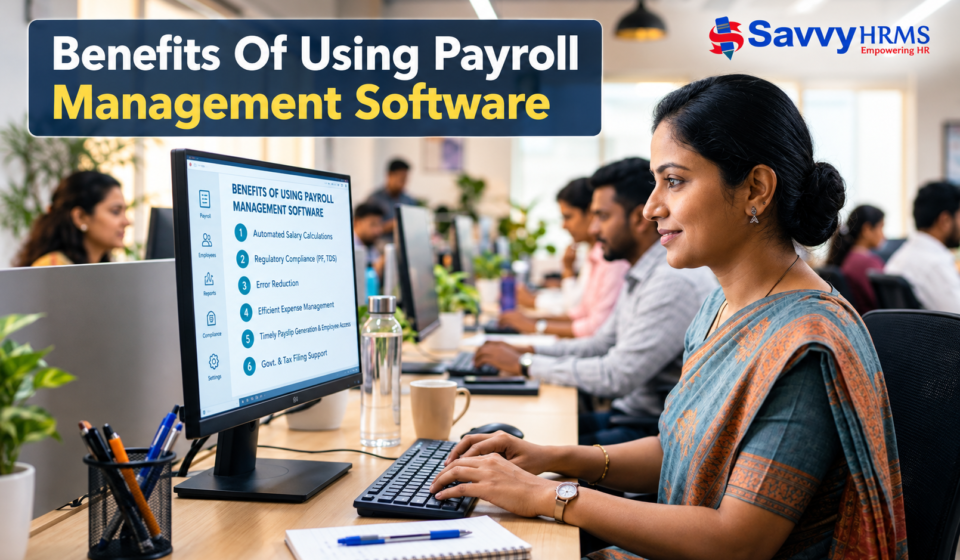

Companies need to handle payroll management because it’s an important duty. Employees expect their salaries to be accurate and paid on time, while HR teams need to manage attendance, deductions, taxes, and compliance without errors.
The increasing business growth requires companies to invest more time in manual task administration. The software solution called Payroll Management Software provides organizations with improved payroll management through automated operations which deliver enhanced speed and better dependability.
The system enables HR teams to operate their entire payroll system through a unified platform which automatically calculates salaries, produces payslips and manages all payroll documentation.
What Is Payroll Management Software?
Payroll Management Software is a digital system which allows companies to handle their employees’ payment management and all their payroll-related operations. The system performs automated processing of salary calculations together with deduction handling, tax calculation, payslip creation and payroll report generation.
HR teams can use a single system to handle their payroll information which eliminates the need for multiple spreadsheets and manual calculation verification. Modern payroll solutions assist organizations in connecting their payroll systems with attendance management and leave tracking, employee information databases and all other HR-related operations.
The system establishes an improved information distribution system which decreases the risk of data mismatches between different operational systems.
Why Do Businesses Need Payroll Software?
Payroll includes a number of tasks that require precision and quick action. Even a tiny error in the attendance data, deductions or salary calculations can affect an employee’s salary.
Handling payroll manually can also use up a lot of time especially when a company has a number of employees. HR staff might need to gather attendance records, figure out the number of days, check the leave balances, apply the deductions, create payslips and keep track of all the records.
A digital payroll system helps to bring all these tasks together and automatically handles many of the tasks that happen over and over again.
What Are the Benefits of Payroll Management Software?
1. Automates Salary Calculations
The system provides its users with their most vital benefit which is the automated salary calculation process.
The system calculates employee salaries by combining staff information with their work attendance records, time-off data, extra work hours, and their compensation breakdown which includes both benefits and tax withholdings.
The process requires HR teams to perform fewer manual calculations. The system uses automation to keep all payroll periods running with the same level of consistency.
2. Reduces Payroll Errors
Payroll errors cause employee dissatisfaction while making HR teams handle additional work.
The use of manual calculations together with spreadsheet-based operations creates an environment where errors tend to occur. The system performs automatic payroll calculations through its stored information which it uses to generate all necessary calculations.
Organizations need to review payroll records through their HR departments before they distribute salaries because this process enables them to detect any potential errors.
3. Saves Time for HR Teams
The process of payroll processing requires workers to perform multiple identical tasks. The process of collecting information, verifying records, salary calculation, payslip creation and report generation consumes more hours to complete.
The software programs operate as automated systems which perform these tasks. The system enables HR personnel to dedicate their time to employee assistance and vital HR duties because they no longer need to perform standard mathematical computations.
4. Simplifies Attendance and Leave Integration
Payroll organizations depend on correct attendance records and leave records to function properly.
HR teams must transfer information manually as they keep attendance and leave data in different systems. The system creates two major problems which include delayed data processing and incorrect data input.
A payroll solution that integrates all functions, including a Biometric Attendance System, allows businesses to link their attendance and leave data with their payment processing systems.
5. Helps Manage Statutory Deductions
Payroll processing in India involves several statutory requirements. The organization needs to perform payroll deductions, calculations for PF & ESI, Professional Tax & TDS and any other applicable requirements based on employee eligibility and organizational standards.
The payroll software system enables HR departments to perform these calculations while keeping all necessary payroll records up to date. However, organizations need to ensure that their software systems receive continuous updates which follow all relevant rules and rate changes.
6. Generates Payslips Easily
Employees need to keep their payslips because these documents help them maintain their personal records, obtain loans and handle their tax responsibilities.
The system produces payslips automatically from its payroll data processing system which eliminates the need for manual payslip creation. Employees can obtain their payslips through the employee self-service portal which the company provides.
The system enables HR teams to distribute payslips at high speed because it reduces their administrative duties.
7. Provides Better Payroll Records
The practice of keeping exact payroll documents serves two purposes which include supporting HR activities and generating required reports.
The system maintains all employee salary information together with their past payroll records, deduction details and their complete payslip data. HR teams can access records when required instead of searching through multiple spreadsheets or files.
The system produces structured payroll data that helps auditors perform their work more effectively.
8. Improves Data Security
The payroll system holds important employee data which consists of salary information, bank details, tax records and deduction records.
A payroll system allows companies to give specific access rights which determine who can view their payroll data. Organizations can define user permissions that allow employees and HR staff to view only the data they can access based on their job responsibilities.
Cloud-based HRM software enables organizations to access their payroll data from different locations because the system offers secure access through its security measures and defined access rules.
9. Supports Payroll Reporting
Payroll teams need to generate reports which help them track salary costs together with deduction amounts, time-based payroll modifications and other payroll data elements.
Payroll software produces reports through which organizations can use these reports to track their payroll data trends which helps HR departments and management teams make better decisions.
Teams can access both standard and personalized reporting solutions which help them create reports without requiring manual report preparation.
10. Makes Payroll More Scalable
Companies face more complicated payroll needs when their operational size reaches higher levels of business growth.
The spreadsheet system that a small team uses for payroll management becomes unusable when staff numbers reach a particular point.
Payroll software establishes an organized system which supports increasing employee numbers and handles complex payroll operations. This makes it easier for businesses to manage payroll as their workforce expands.
Payroll Management Software vs. Manual Payroll
| Manual Payroll | Payroll Management Software |
| Requires more manual calculations | Automates salary calculations |
| Higher risk of data-entry errors | Helps reduce calculation errors |
| Time-consuming payroll processing | Faster payroll processing |
| Records may be spread across files | Centralized payroll information |
| Manual payslip preparation | Automated payslip generation |
| Difficult to scale | Easier to manage growing teams |
| Limited reporting flexibility | Payroll reports can be generated quickly |
How to Choose the Right Payroll Software?
Businesses should consider their payroll requirements before selecting a solution. Some important factors include:
- Employee strength and business size
- Attendance and leave integration
- Payroll automation
- Statutory compliance support
- Payslip generation
- Employee self-service
- Reporting and analytics
- Data security and access controls
- Integration with other HR processes
- Ease of use and scalability
The right solution should not only process salaries but also fit into the organization’s overall HR workflow.
Conclusion:
Overall, employee satisfaction depends on payroll which also supports HR operations to function smoothly. The process of manual workforce management demands extended time while it creates more areas for errors to occur when staff numbers increase.
Businesses can use payroll software to perform automated salary calculations and deduction management while generating payslips and keeping track of records which results in better payroll precision. The system enables HR departments to connect their payroll operations with attendance monitoring and leave tracking and other staff data systems.
Businesses achieve better payroll organization through proper solution selection which enables them to save time and reduce their need for manual work.
Looking to simplify your payroll process?
Book a free demo of Savvy HRMS today and explore how an integrated HRMS can make payroll and employee management easier.