
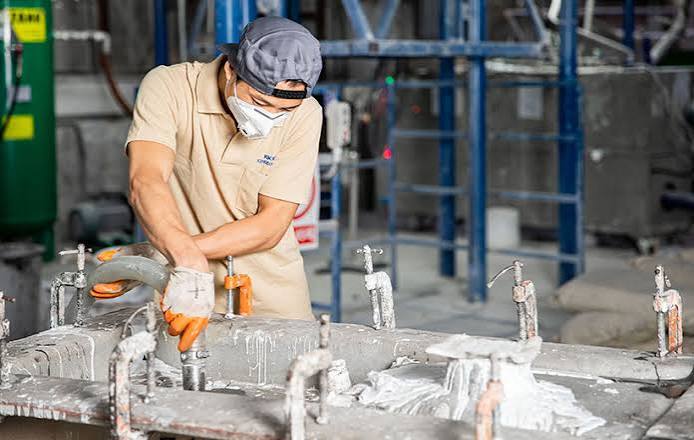

Solid surface materials are widely used in residential and commercial interiors because of their design flexibility, smooth appearance, and suitability for customized applications. They are commonly manufactured into kitchen countertops, bathroom vanity tops, washbasins, reception desks, wall panels, and decorative furniture components. Although these products may look similar, their production costs can vary considerably depending on their composition, manufacturing methods, quality requirements, and customization levels.
Understanding the factors behind manufacturing expenses helps buyers make better purchasing decisions and evaluate supplier quotations more accurately. Working with an experienced Solid Surface Manufacturer can also help businesses understand how raw materials, production capacity, product specifications, and order quantities influence the final price. Examining these cost factors provides a clearer picture of what determines the value of solid surface products.
1. Raw Material Costs
Raw materials represent one of the largest components of solid surface production expenses. Most solid surface formulations combine mineral fillers, resin binders, pigments, and specialized additives.
The cost of these ingredients depends on their quality, availability, supplier pricing, and required proportions.
Common raw materials include:
- Aluminum trihydrate (ATH) and other mineral fillers
- Acrylic resin
- Polyester resin
- Pigments and colorants
- Decorative particles
- Processing additives
Higher-grade ingredients may increase manufacturing expenses but can support more consistent product characteristics. Manufacturers must balance material quality with production efficiency to achieve the required specifications at a competitive cost.
Changes in raw material prices can also influence quotations, particularly when manufacturers purchase ingredients from international suppliers.
2. Type of Resin Used in Production
The resin system plays an important role in determining both product characteristics and manufacturing costs.
Acrylic-based solid surfaces are commonly valued for their fabrication flexibility, smooth appearance, and suitability for certain thermoforming applications. Polyester-based formulations may offer different processing characteristics and cost structures.
Some products use blends of acrylic and polyester resins to achieve a particular balance of properties.
The selected resin affects several production considerations:
- Ingredient purchasing expenses
- Mixing and processing requirements
- Curing conditions
- Fabrication characteristics
- Product performance
- Quality control requirements
Buyers should compare resin composition alongside technical specifications rather than choosing a material based only on its initial price.
3. Mineral Filler Quality and Proportion
Mineral fillers provide much of the structure and body of solid surface materials.
Aluminum trihydrate is frequently used in solid surface formulations, although the exact composition varies between products.
The grade, particle characteristics, purity, and proportion of mineral filler can influence manufacturing costs. Higher-quality or more specialized filler materials may have different purchasing and processing requirements.
Manufacturers must also maintain accurate formulation ratios to achieve consistent results. Incorrect measurements can lead to production defects, material waste, or additional inspection expenses.
Therefore, mineral filler selection affects both direct ingredient costs and the overall efficiency of production.
4. Product Thickness and Dimensions
The dimensions of a solid surface product directly affect the quantity of raw material required.
Thicker sheets generally consume more material than thinner alternatives of the same length and width. Larger sheets also require suitable molds, production equipment, and handling arrangements.
Manufacturing costs may increase with:
- Greater material thickness
- Larger sheet dimensions
- Non-standard product sizes
- Special edge profiles
- Oversized molded components
- Additional cutting requirements
Buyers should determine the required dimensions before requesting quotations. Selecting standard sizes where practical can simplify production planning and reduce unnecessary material waste.
5. Manufacturing Technology and Equipment
The equipment used during production has a significant influence on manufacturing expenses.
Solid surface manufacturing may involve automated mixing systems, vacuum equipment, molding tools, curing systems, trimming machines, and surface finishing equipment.
Advanced machinery can improve production consistency and reduce manual handling. However, purchasing, operating, maintaining, and upgrading this equipment requires investment.
Important cost considerations include:
- Machinery purchase and depreciation
- Equipment maintenance
- Energy consumption
- Replacement parts
- Automation systems
- Production monitoring technology
Manufacturers must consider these expenses when calculating product prices. Facilities with efficient equipment may be able to improve output and reduce certain operating costs over time.
6. Labor and Workforce Expenses
Although automation supports many manufacturing activities, skilled workers remain important throughout production.
Employees may be responsible for material preparation, equipment operation, molding, curing supervision, finishing, inspection, packaging, and maintenance.
Labor costs depend on factors such as workforce experience, production location, wage levels, training requirements, and the complexity of the product.
Customized solid surface components may require additional manual work compared with standard sheet production.
Investing in trained employees can help reduce production mistakes, improve finishing quality, and minimize material waste.
7. Product Customization Requirements
Customization is an important factor affecting solid surface production costs.
Standard sheets are generally easier to manufacture in repeated batches because their dimensions, colors, and specifications are already established.
Customized products may require additional design work, testing, equipment adjustments, or specialized production arrangements.
Examples include:
- Custom color development
- Unique patterns and decorative effects
- Non-standard sheet dimensions
- Special thickness requirements
- Curved or molded components
- Integrated sinks and vanity tops
- Customized countertop designs
Some projects may also require prototypes or sample production before full manufacturing begins.
The more complex the customization, the greater the potential impact on production time, labor, material consumption, and tooling expenses.
8. Color and Pattern Complexity
Color selection can influence the cost of solid surface materials, especially when buyers request unusual shades or complex decorative effects.
Basic colors may be easier to produce using established formulations and production procedures. Custom shades can require pigment testing, formulation adjustments, and additional sample approvals.
Decorative designs involving multiple colors or particles may also require more careful mixing and quality inspection.
Cost-related considerations include:
- Pigment type and quantity
- Custom color development
- Decorative particle materials
- Mixing complexity
- Pattern consistency
- Sample preparation
For projects involving multiple production batches, manufacturers may also need to maintain approved color references to minimize visible variations.
9. Energy Consumption and Utility Expenses
Manufacturing facilities require electricity and other utilities to operate production equipment.
Mixing systems, curing equipment, ventilation, cutting machinery, polishing tools, and material handling systems all contribute to energy consumption.
Energy expenses may vary according to:
- Production volume
- Equipment efficiency
- Operating hours
- Local electricity prices
- Manufacturing technology
- Environmental control requirements
Efficient equipment and well-planned production schedules can help reduce unnecessary energy use.
Energy costs are particularly relevant in manufacturing environments where curing, climate control, or other processes require consistent operating conditions.
10. Quality Control and Testing Expenses
Quality control is necessary to ensure that finished solid surface products meet approved specifications.
Manufacturers may inspect raw materials, monitor production conditions, measure dimensions, evaluate surface appearance, and conduct relevant performance tests.
These activities require trained personnel, measuring equipment, testing materials, and documentation systems.
Common quality control expenses include:
- Incoming material inspections
- Dimensional measurements
- Surface finish evaluations
- Color consistency checks
- Mechanical testing
- Chemical resistance testing
- Product documentation
- Defect investigation
Although quality control adds to operating costs, it can reduce the financial impact of defective products, customer complaints, returns, and production rework.
11. Production Volume and Order Quantity
Order quantity has a significant influence on the cost per unit.
Manufacturers generally have fixed expenses associated with production setup, equipment operation, mold preparation, and quality inspection. When these costs are distributed across a larger order, the average cost per unit may decrease.
Bulk orders may provide opportunities for:
- More efficient material purchasing
- Longer production runs
- Reduced setup frequency
- Better equipment utilization
- Simplified packaging arrangements
However, larger orders do not automatically guarantee lower prices. Special materials, complex customization, limited production capacity, and strict delivery requirements can affect the final quotation.
Buyers should request pricing based on realistic order quantities and confirm whether volume discounts are available.
12. Manufacturing Waste and Material Utilization
Material waste is another important factor in solid surface production costs.
Waste may occur during mixing, molding, trimming, cutting, surface finishing, or quality inspection.
Poor production planning and inaccurate measurements can increase unnecessary material consumption.
Manufacturers can improve material utilization through:
- Accurate formulation measurements
- Optimized cutting layouts
- Efficient production scheduling
- Equipment maintenance
- Better process monitoring
- Reuse of suitable recoverable materials where technically and safely appropriate
Reducing waste helps control raw material expenses and supports more efficient resource management.
13. Packaging and Transportation Requirements
Finished solid surface sheets and customized components require suitable packaging to prevent damage during storage and transportation.
Packaging costs depend on product dimensions, weight, quantity, destination, and handling requirements.
Common packaging materials may include protective films, foam, corner guards, reinforced cartons, and wooden crates.
Transportation expenses are influenced by several additional factors:
- Shipping distance
- Freight method
- Shipment weight and volume
- Fuel prices
- Export documentation
- Customs duties and applicable taxes
- Insurance and handling charges
For international buyers, shipping and import-related expenses can represent a significant portion of the total procurement budget.
It is therefore important to distinguish the factory price from the final landed cost.
14. Factory Location and Operating Expenses
The location of a manufacturing facility can affect its overall production cost structure.
Factories in different regions may experience different expenses for labor, electricity, industrial property, transportation, taxes, and raw material sourcing.
Access to suppliers and logistics infrastructure can also influence manufacturing efficiency.
A facility located near major raw material suppliers may reduce certain transportation expenses. However, other operating costs may offset these advantages.
Buyers should evaluate the complete quotation and service capabilities rather than assuming that manufacturers in a particular region will always offer lower prices.
15. Research, Development, and Product Innovation
Manufacturers often invest in research and development to improve formulations, introduce new colors, develop product designs, and refine production methods.
These activities require technical staff, testing equipment, sample materials, and development time.
Research and development expenses may contribute to the cost of products that involve specialized formulations or advanced manufacturing techniques.
Innovation can also provide longer-term manufacturing benefits by improving material utilization, reducing defects, and increasing production efficiency.
For buyers, the value of these investments may be reflected in product variety, technical capabilities, and improved consistency.
16. Market Demand and Raw Material Price Fluctuations
External market conditions can influence the production cost of solid surface materials.
Changes in the supply and demand for resins, mineral fillers, pigments, and other ingredients may affect purchasing prices.
Other factors include:
- International supply chain disruptions
- Currency exchange rate movements
- Changes in energy prices
- Import and export regulations
- Seasonal demand fluctuations
- Transportation cost increases
Manufacturers may adjust quotations when their operating expenses change significantly.
For large projects, buyers can discuss quotation validity periods and pricing arrangements to reduce uncertainty during procurement.
17. How Buyers Can Compare Solid Surface Manufacturing Costs
A low quotation does not necessarily represent the best overall value. Buyers should understand which materials, specifications, and services are included in the quoted price.
A structured comparison can help identify important differences between suppliers.
| Cost factor | What buyers should check |
|---|---|
| Material composition | Resin type, filler quality, and formulation |
| Product dimensions | Length, width, and thickness |
| Surface design | Standard colors or customized patterns |
| Manufacturing | Production methods and equipment |
| Quality control | Inspection procedures and test documentation |
| Order quantity | Unit pricing and volume discounts |
| Packaging | Protective materials and shipping preparation |
| Transportation | Freight, insurance, and handling |
| Customization | Tooling, samples, and special production work |
| Warranty | Coverage, exclusions, and conditions |
Requesting detailed quotations from multiple manufacturers makes it easier to compare equivalent specifications.
18. Practical Ways to Manage Solid Surface Procurement Costs
Businesses can control purchasing expenses without automatically compromising product requirements.
Several practical approaches can improve procurement efficiency:
Choose appropriate specifications: Select dimensions, thicknesses, and finishes based on actual project requirements rather than unnecessary upgrades.
Plan orders early: Early procurement reduces the likelihood of urgent production arrangements and expedited shipping costs.
Consider standard product options: Standard colors and dimensions may reduce customization expenses.
Optimize material layouts: Accurate measurements and cutting plans can minimize offcuts and unnecessary waste.
Compare total landed costs: Include packaging, transportation, duties, and other applicable charges.
Review samples before bulk orders: Sample approval helps reduce the risk of ordering materials that do not meet design expectations.
Build reliable supplier relationships: Clear communication and consistent purchasing arrangements can support better planning over time.
These measures help buyers manage budgets while maintaining appropriate quality and performance requirements.
Conclusion
The production cost of solid surface materials is influenced by a combination of raw material prices, resin selection, product dimensions, manufacturing technology, labor, customization, quality control, energy consumption, and logistics. Order quantity, factory location, market conditions, and research investments can also affect the final price.
For buyers, understanding these factors makes it easier to evaluate quotations and identify the reasons behind price differences between products. Instead of focusing exclusively on the lowest purchase price, businesses should consider material specifications, manufacturing consistency, technical support, and total procurement expenses.
A well-informed purchasing strategy helps residential developers, contractors, distributors, and commercial project managers select solid surface materials that provide an appropriate balance of cost, quality, and long-term value.