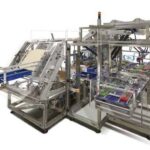

Packaging is an essential part of the manufacturing process because it protects products, maintains quality, and prepares finished goods for storage and distribution. As businesses expand, choosing an appropriate packaging method becomes increasingly important. Some manufacturers continue to rely on manual packaging because of its simplicity, while others adopt advanced machinery to improve production efficiency and handle larger order volumes.
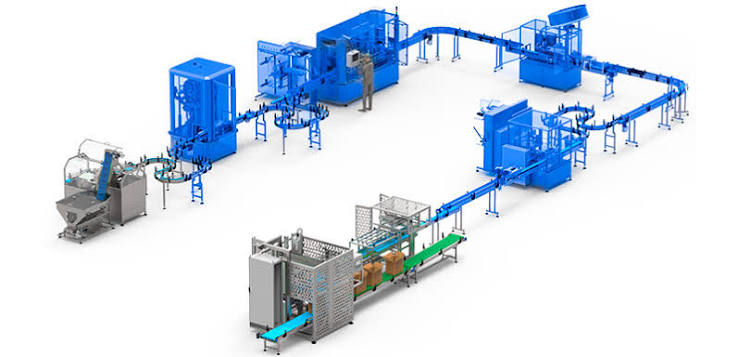
Automated Packaging Lines offer an integrated approach to packaging by connecting multiple machines to perform operations such as filling, sealing, labeling, wrapping, and palletizing. Manual packaging, on the other hand, depends primarily on employees to complete these activities. Understanding the differences between these methods helps manufacturers determine which approach best matches their production requirements, operating budgets, and long-term business objectives.
Understanding Manual Packaging Processes
Manual packaging involves employees performing most packaging activities using basic tools, equipment, and handling procedures. Workers may measure products, fill containers, close packages, attach labels, arrange cartons, and prepare finished goods for transportation.
This approach is commonly found in small manufacturing facilities, workshops, specialty product businesses, and operations with relatively low production volumes.
One advantage of manual packaging is its flexibility. Employees can handle unusual product shapes, customized packaging requirements, and small production batches without requiring complex machinery.
However, manual processes may become less practical when production volumes increase. Repetitive tasks, employee fatigue, inconsistent operating speeds, and higher labor requirements can affect overall productivity.
Understanding Automated Packaging Lines
Automated packaging systems use interconnected machinery and control technologies to perform packaging operations with limited manual involvement.
A typical system may include automatic feeders, conveyor belts, filling machines, sealing equipment, labeling units, inspection devices, and robotic palletizers.
These components work together to move products through different packaging stages. Sensors and programmable controls coordinate machine movements and help maintain consistent production conditions.
Automated packaging is widely used in industries such as food and beverages, pharmaceuticals, cosmetics, chemicals, and consumer goods manufacturing.
Key Differences Between Automated and Manual Packaging
Although both methods aim to prepare products for storage, transportation, and distribution, they differ significantly in their operating processes and capabilities.
| Comparison Factor | Manual Packaging | Automated Packaging |
|---|---|---|
| Labor requirements | Requires more direct employee involvement | Reduces repetitive manual tasks |
| Production speed | Depends on employee working speed | Operates at programmed machine speeds |
| Packaging consistency | May vary between employees | Provides more standardized results |
| Initial investment | Generally lower | Usually requires higher upfront investment |
| Operating costs | Higher dependence on labor | Includes energy and maintenance expenses |
| Production capacity | Often suitable for smaller batches | Can support larger production volumes |
| Flexibility | Easy to adapt to certain specialized tasks | Depends on machine adjustability |
| Quality inspection | Frequently relies on manual checking | Can integrate automatic inspection |
| Maintenance | Requires basic tools and equipment servicing | Requires technical equipment maintenance |
| Scalability | Often requires additional employees | May support expansion through additional machinery |
The most appropriate method depends on production volume, product complexity, available resources, and business objectives.
1. Production Speed and Output Capacity
Production speed is one of the most noticeable differences between manual and automated packaging.
In manual operations, employees must complete individual tasks such as filling containers, applying labels, sealing packages, and arranging products. The time required depends on task complexity, employee experience, and working conditions.
Automated equipment performs repetitive activities through programmed operating cycles. Multiple machines can work simultaneously or in sequence, allowing products to move continuously through the packaging process.
For example, an automated bottle packaging system can feed containers, fill products, apply caps, and attach labels without requiring employees to handle every bottle individually.
This makes automation particularly useful for manufacturers handling large orders or operating multiple production shifts.
2. Labor Requirements and Workforce Management
Manual packaging requires employees to perform most production activities. As demand increases, businesses may need to recruit additional workers or introduce more shifts to maintain output.
Automated systems reduce the need for direct human involvement in repetitive packaging tasks. Employees can instead supervise machinery, monitor production performance, conduct inspections, and perform maintenance activities.
However, automation does not eliminate the need for workers. Manufacturers still require trained operators, maintenance technicians, quality control personnel, and production supervisors.
The main difference is how employees contribute to the packaging process.
3. Packaging Accuracy and Product Consistency
Maintaining consistent packaging quality is important for protecting products and meeting customer expectations.
Manual operations may experience variations in filling quantities, label placement, sealing pressure, and package appearance. These differences can occur because of human error, fatigue, or inconsistent working procedures.
Automated equipment uses programmed settings, sensors, and mechanical controls to perform repetitive operations more consistently.
Filling Accuracy
Automatic filling machines dispense predetermined quantities of liquids, powders, or granular materials. This helps reduce overfilling and underfilling.
Sealing Consistency
Automated sealing machines apply controlled operating conditions to create uniform package closures.
Labeling Precision
Automatic labeling equipment helps maintain consistent label positioning and supports accurate product identification.
Although automated systems still require calibration and quality monitoring, they can reduce variations across large production batches.
4. Initial Investment and Long-Term Expenses
Cost is an important consideration when comparing manual and automated packaging.
Manual packaging generally requires less initial investment because businesses may only need basic tools, workstations, and simple equipment.
Automated packaging requires a larger upfront investment. Expenses may include machinery purchases, transportation, installation, electrical work, system integration, and employee training.
However, the long-term financial comparison involves more than the purchase price.
Manual operations may require continuing labor expenses, while automated systems involve electricity, maintenance, replacement components, and technical servicing.
Businesses should evaluate the total cost of ownership and compare it with potential improvements in productivity, material utilization, and operating efficiency.
5. Packaging Quality and Product Protection
Packaging quality affects product condition during handling, storage, and transportation.
Manual packaging can provide excellent results when employees are properly trained and production volumes are manageable. However, maintaining consistent quality across very large batches may become challenging.
Automated equipment can improve consistency by controlling important operations such as filling, sealing, capping, and labeling.
Some advanced systems also integrate inspection technologies to identify damaged containers, missing caps, incorrect weights, and other defects.
These capabilities are particularly valuable in industries with strict product protection and quality requirements.
6. Flexibility and Customization
Manual packaging is often suitable for specialized products that require individual handling or frequent changes in packaging design.
For example, small businesses producing handmade goods or customized gift packages may prefer manual processes because employees can adjust their work according to individual requirements.
Automated systems can also support customization, but their flexibility depends on equipment design and programming.
Modern machinery may include adjustable settings, interchangeable components, and programmable controls that allow manufacturers to handle different product sizes and packaging formats.
Businesses should consider how frequently their packaging requirements change before choosing between these approaches.
7. Workplace Safety and Physical Workload
Manual packaging may involve repetitive movements, frequent lifting, and prolonged standing. These activities can contribute to physical fatigue and increase the risk of certain workplace injuries.
Automation can reduce employee involvement in repetitive physical tasks by allowing conveyors, robotic equipment, and automatic handling systems to move products between production stages.
Robotic palletizers, for example, can handle repetitive carton stacking activities that would otherwise require substantial manual effort.
Nevertheless, automated machinery introduces its own safety considerations. Protective guards, emergency stops, safety sensors, and operator training remain essential for maintaining safe production environments.
8. Production Downtime and Maintenance
Manual packaging processes may continue operating even when individual tools require minor repairs, depending on the workflow and available equipment.
Automated systems, however, depend on interconnected machinery. A failure in one important machine may interrupt other connected operations.
For this reason, automated packaging equipment requires regular preventive maintenance.
Manufacturers should inspect moving parts, clean product-contact surfaces, check sensors, calibrate filling equipment, and replace worn components.
Modern systems may also use condition-monitoring technologies to identify unusual equipment behavior and help maintenance teams plan repairs.
Proper maintenance is essential for keeping automated operations reliable.
9. Scalability and Business Growth
Manual packaging can be suitable when businesses operate with small production volumes or limited product ranges.
However, expanding manual operations often requires additional employees, workstations, and production space.
Automated packaging systems can provide greater opportunities for scaling production. Manufacturers may increase capacity by adjusting operating schedules, upgrading equipment, or adding additional machines to existing production lines.
Modular systems are especially useful because they allow businesses to expand packaging operations gradually.
Choosing a scalable solution can help manufacturers prepare for future demand without completely redesigning their production facilities.
10. Material Waste and Resource Efficiency
Packaging material waste can increase manufacturing expenses and affect environmental performance.
Manual operations may produce inconsistent filling quantities, damaged packages, or incorrectly applied labels.
Automated equipment can reduce certain types of waste through accurate measurement, controlled sealing, and standardized operating procedures.
For example, automatic dosing systems help dispense specified product quantities, while inspection equipment can identify packaging defects before products proceed to later stages.
However, actual resource savings depend on machine efficiency, packaging materials, maintenance practices, and production settings.
Advantages of Automated Packaging Over Manual Packaging
Both methods have practical applications, but automated packaging offers several advantages for businesses with demanding production requirements.
The most important benefits include:
- Higher production capacity: Machinery can perform repetitive packaging operations at consistent speeds.
- Improved accuracy: Programmed controls help maintain uniform filling, sealing, and labeling.
- Reduced repetitive labor: Employees can focus on supervision and more technical responsibilities.
- Better process coordination: Integrated machinery reduces unnecessary product movement between packaging stages.
- Improved inspection capabilities: Sensors and vision systems can identify certain packaging defects.
- Greater scalability: Additional machinery can be integrated as production requirements increase.
- Consistent packaging presentation: Automated processes help maintain uniform finished products.
These benefits make automation an attractive option for manufacturers seeking to improve large-scale production operations.
When Is Manual Packaging the Better Choice?
Despite the advantages of automation, manual packaging remains practical in several situations.
Businesses may prefer manual processes when:
- Production volumes are relatively low.
- Products require individual customization.
- Packaging designs change frequently.
- Available investment capital is limited.
- Products require delicate or specialized handling.
- Production activities involve small or irregular batches.
For these businesses, manual packaging can provide flexibility without requiring significant machinery investment.
When Should Manufacturers Invest in Automated Packaging?
Automation becomes more attractive when packaging operations involve high production volumes, repetitive tasks, and consistent packaging requirements.
Manufacturers should consider automation when they experience frequent production bottlenecks, increasing labor expenses, inconsistent packaging quality, or difficulties meeting customer delivery schedules.
A gradual transition may also be appropriate. Businesses can begin by automating one operation, such as filling or labeling, before integrating additional equipment.
This approach allows manufacturers to evaluate performance improvements while managing investment costs.
How to Choose the Right Packaging Approach
Selecting between manual and automated packaging requires an assessment of current production conditions and future business goals.
Consider the following factors before making a decision:
- Production volume: Estimate the number of products that need to be packaged daily.
- Product requirements: Examine product dimensions, weight, texture, and handling needs.
- Packaging complexity: Determine whether packaging involves simple or multiple coordinated operations.
- Available budget: Compare initial investment with ongoing labor and maintenance expenses.
- Workforce availability: Evaluate the availability of trained employees and technical personnel.
- Factory layout: Consider the space required for machinery, workstations, and material movement.
- Future expansion: Assess whether production capacity is expected to increase.
A balanced evaluation helps businesses select a packaging method that supports their operational requirements without creating unnecessary expenses.
The Future of Packaging Automation in Manufacturing
Packaging technology continues to develop as manufacturers explore more advanced production methods.
Artificial intelligence, machine vision, industrial robotics, and connected monitoring systems are improving how packaging operations are controlled and inspected.
Collaborative robots are helping automate selected tasks while working alongside human operators in suitable environments.
Meanwhile, smart sensors and industrial connectivity are making it easier to monitor equipment performance and identify potential maintenance requirements.
Sustainable packaging is another important development, encouraging manufacturers to reduce material consumption and adopt recyclable packaging formats.
These advancements are creating opportunities for more flexible and efficient manufacturing operations.
Conclusion
Automated and manual packaging methods both serve important purposes in modern manufacturing. Manual packaging provides flexibility and lower initial investment, making it suitable for small production volumes and specialized applications. Automated systems offer greater production capacity, consistent packaging quality, reduced repetitive labor, and improved coordination between different packaging stages.
The right choice depends on product requirements, production volume, available investment, workforce capabilities, and long-term business plans. Manufacturers should evaluate these factors carefully before deciding whether to maintain manual operations, introduce partial automation, or invest in a fully integrated system.
For businesses exploring modern packaging equipment and integrated production solutions, Techflow Pack can provide a useful reference when researching packaging line configurations and automation possibilities.