
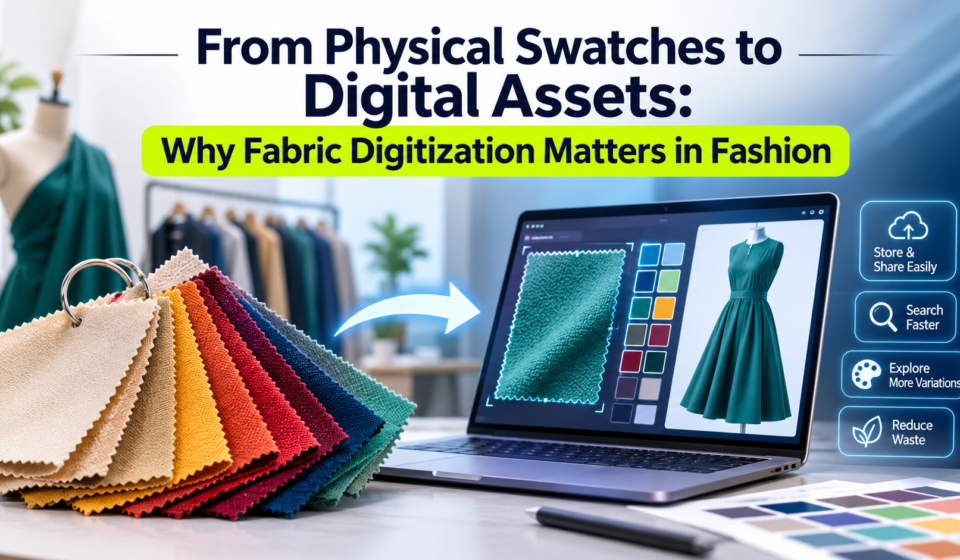

Walk into almost any design studio and you will find a wall, a drawer, or a rolling rack dedicated entirely to fabric swatches. Each one represents a physical sample that had to be ordered, shipped, cataloged, and stored, often for a single collection cycle before being replaced by the next season’s options. It works, but it is slow, and it does not travel well when a design team, a factory, and a brand’s merchandising group are not all in the same room.
This is the specific gap that fabric digitization platforms like Style3D Fabric are built to close, turning a physical textile sample into a reusable digital asset a design team can call on instantly.
The Hidden Cost of Physical-Only Fabric Libraries
Fabric sourcing has always involved a certain amount of waiting: waiting for a swatch to arrive, waiting for a second option after the first one is rejected, waiting for a supplier to confirm whether a color is even still available. When fabric selection is tied entirely to physical samples, every one of those waits also delays the design decisions that depend on them, like how a garment will drape or how a print will read at scale.
There is also a quieter cost. Physical swatch libraries are hard to search, easy to lose track of, and nearly impossible to share instantly across time zones. A fabric a designer loved last season might be sitting in a drawer nobody remembers to check.
What Fabric Digitization Actually Captures
Digitizing a textile is not the same as simply photographing it. A proper fabric digitization process captures how the material actually behaves: its appearance under different lighting, its texture and surface detail, and physical properties like weight, stretch, and drape that affect how a garment made from it will move. That combination is what allows a digital fabric to be used convincingly inside a 3D garment simulation, rather than looking like a flat image wrapped around a shape.
Style3D Fabric approaches this with both software and hardware, scanning and measuring physical textile samples and turning them into reusable digital assets that can be dropped into a 3D design workflow, edited for color or pattern variations, and previewed on a digital garment before a single physical cut is made.
Where This Changes the Day-to-Day Workflow
Once a fabric exists as a digital asset, it stops being something that has to be re-sourced and re-shipped every time someone wants to see how it looks on a new silhouette. A designer can apply the same digitized velvet, denim, or technical knit to five different style concepts in an afternoon, something that would take weeks if it depended on cutting physical swatches for each one.
It also changes how sourcing and design teams collaborate. A digital fabric library can be searched by weight, composition, or color rather than relying on someone remembering which drawer a swatch is in. And because the asset is digital, it can be shared with a design team on the other side of the world without a courier involved.
Getting the Realism Right
The value of a digital swatch library depends almost entirely on how convincingly the materials behave once they are draped on a garment. A fabric that looks right as a flat swatch but drapes unrealistically in simulation will mislead a designer rather than help them. This is why fabric digitization tools that capture physical material properties, not just surface appearance, tend to hold up better once a brand starts relying on them for real design decisions rather than quick visualization.
Teams evaluating a fabric digitization solution are generally better served by testing it against a handful of their own trickiest materials, a stretch jersey, a structured wool, a sheer chiffon, rather than judging it only on simple cottons that behave predictably in any system.
Making a Digital Fabric Library an Ongoing Habit
A digital fabric library only stays useful if it keeps growing alongside whatever a brand is actually sourcing, which means digitization needs to become a routine step in material sourcing rather than a one-time catch-up project. A supplier sends a new swatch, it gets scanned and added to the library within days, not left in a drawer until someone eventually gets around to a big digitization push. Brands that treat it this way tend to end up with a library that reflects what is actually available right now, rather than a snapshot of what was available whenever the last digitization effort happened.
It also helps to assign clear ownership of this process. If digitizing a new fabric is everyone’s job in theory, it tends to become no one’s job in practice, and the library quietly falls behind. Naming a specific person or small team responsible for keeping the digital fabric collection current, the same way someone is usually responsible for the physical swatch room today, is a small organizational step that keeps the bigger investment from losing value over time.
For readers wanting the bigger picture beyond digitization specifically, Style3D’s broader discussion of fabric design and innovation is a useful companion read, looking at how material choices shape fashion trends well beyond any single digitizing workflow.
A Smaller Swatch Drawer, A Bigger Library
None of this replaces the need for a physical fabric in hand before final production approval. But for the early rounds of material selection and the dozens of “what if we tried this in a different fabric” questions that come up during design, a well-built digital fabric library lets teams explore more options, faster, without waiting on shipping or running out of swatch stock. For brands managing fabric across multiple factories and design hubs, that shift from physical-only to digital-plus-physical can be the difference between a two-day turnaround and a two-week one.