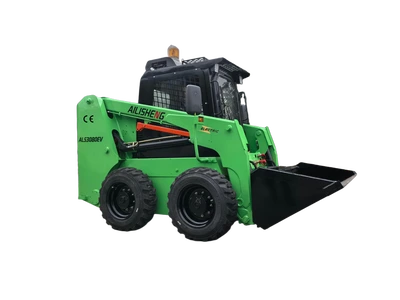

Electric skid steer loaders are becoming an important option for construction companies, landscaping contractors, agricultural businesses, and material-handling operations. Their compact design, electric powertrain, and potential for lower local emissions make them suitable for a variety of indoor and outdoor applications. However, equipment performance and long-term reliability depend heavily on the quality of the machine and the capabilities of the company that produces it.
Choosing a dependable Electric Skid Steer Loaders Manufacturer requires more than comparing product prices or advertised specifications. Buyers should evaluate manufacturing standards, component quality, battery technology, safety features, quality-control procedures, and after-sales support. Understanding these factors can help businesses identify a manufacturer capable of supplying reliable equipment that meets their operational requirements.
1. Strong Manufacturing Capabilities
A reliable manufacturer needs the facilities, technical expertise, and production processes required to build consistent, durable equipment. Manufacturing capabilities influence everything from structural strength to electrical-system reliability.
When evaluating a manufacturer, ask about its production facilities, assembly procedures, component sourcing, and quality-management practices. A company with organized production processes should be able to explain how it maintains consistent standards across different machines and production batches.
Important areas to investigate include:
- Chassis fabrication and structural assembly
- Welding and component-fitting procedures
- Electrical-system installation
- Hydraulic-system assembly
- Battery integration and protection
- Final machine inspection and testing
Manufacturing experience can also be valuable, particularly when it involves electric machinery or similar material-handling equipment. However, experience alone does not guarantee quality. Buyers should look for verifiable evidence of production capabilities and consistent product performance.
2. High-Quality Components and Materials
The quality of individual components has a direct influence on a loader’s durability, maintenance requirements, and operating performance. Even a well-designed machine may experience reliability problems if important components are poorly manufactured or unsuitable for the intended workload.
A dependable manufacturer should use components that match the machine’s rated capacity, operating conditions, and expected service life.
Structural Components
The chassis, lift arms, attachment mounting points, and other load-bearing structures must be designed to withstand the forces generated during normal operation. Buyers should ask about structural testing, welding inspections, and the machine’s rated operating limits.
Hydraulic Components
Hydraulic pumps, cylinders, hoses, and valves influence lifting performance and attachment operation. Their specifications should match the machine’s intended applications and the requirements of compatible attachments.
Electrical Components
Motors, controllers, wiring harnesses, connectors, and protective systems should be appropriately rated and installed. Reliable electrical integration can help reduce faults and simplify maintenance.
Wear Components
Tires, seals, filters, and other service items affect operating expenses over time. Ask whether replacement components are readily available and whether the manufacturer provides clear maintenance instructions.
Evaluating component quality helps buyers understand whether the equipment is designed for their actual workload rather than simply meeting basic purchasing requirements.
3. Reliable Battery and Electric Drive Technology
Battery performance is one of the most important considerations when purchasing an electric skid steer loader. The battery and electric drive system affect runtime, power delivery, charging requirements, and long-term ownership costs.
A reliable manufacturer should provide clear information about the battery chemistry, rated capacity, usable energy, charging process, and expected service life under specified conditions.
Buyers should also examine the battery management system. Depending on the design, this system may monitor battery temperature, voltage, current, and charging conditions while providing protection against relevant electrical faults.
Ask the manufacturer questions such as:
- What is the battery’s rated and usable capacity?
- What operating conditions were used to estimate runtime?
- How long does charging take with the supplied equipment?
- What environmental conditions are recommended?
- What battery warranty applies?
- Are replacement batteries available?
- How are electrical faults diagnosed and repaired?
Remember that actual runtime depends on load weight, terrain, attachment usage, ambient temperature, and operator behavior. A credible manufacturer should explain these variables rather than presenting a single runtime figure as guaranteed under all conditions.
4. Consistent Quality-Control Procedures
Quality control helps manufacturers identify defects before equipment reaches customers. It also supports consistency when multiple machines are produced using the same design.
When evaluating a manufacturer, ask how quality is monitored throughout production and whether inspection results are documented.
A comprehensive quality-control process may include:
- Incoming component inspections
- Structural and welding checks
- Electrical connection inspections
- Hydraulic leak checks
- Control-system verification
- Battery and charging-system checks
- Functional testing of travel and lifting systems
- Final inspection before shipment
Ask whether every machine undergoes a pre-delivery inspection and whether the manufacturer can provide a checklist or inspection report.
For bulk purchases, consistency becomes especially important. Construction companies and equipment distributors need confidence that machines supplied across a single order will have the agreed specifications and quality standards.
A manufacturer that can explain its inspection procedures and provide supporting records offers buyers a clearer basis for evaluating product quality.
5. Compliance With Relevant Safety Standards
Safety and regulatory compliance should be assessed before placing an order, particularly when equipment will be imported or operated in a regulated market.
The applicable requirements depend on the machine’s design, intended use, destination country, and relevant legislation. A reliable manufacturer should be able to identify the documentation applicable to the specific model and explain how buyers can verify it.
Depending on the market and product configuration, relevant documentation may address machinery safety, electrical safety, electromagnetic compatibility, battery systems, or other regulatory requirements.
Buyers should check:
- Whether the machine has the required conformity documentation
- Whether declarations and test reports apply to the exact model
- Whether the manufacturer’s name and product details match the documents
- Whether the relevant standards and regulations are identified
- Whether operator manuals and safety instructions are supplied
For products covered by applicable European Union legislation, CE marking must be supported by the required conformity assessment and documentation. A logo alone is not sufficient evidence of compliance.
Similarly, ISO 9001 certification relates to a quality management system; it does not independently establish that an individual machine meets every safety requirement.
Verification is essential because documentation that applies to one product or factory may not necessarily apply to another model or configuration.
6. Practical Product Testing and Performance Verification
Product testing helps establish whether an electric skid steer loader performs according to its specifications. A manufacturer should be able to explain how it evaluates the machine before delivery and what evidence is available to buyers.
Relevant tests may cover lifting functions, travel operation, hydraulic performance, charging behavior, control response, and safety-related functions.
However, the presence of a test procedure is not enough on its own. Buyers should understand the conditions under which the machine was tested and whether the results are representative of the intended application.
For example, a loader used for indoor material handling may need to demonstrate maneuverability in confined spaces, while a machine intended for outdoor construction may require evaluation under suitable ground and load conditions.
If possible, request a product demonstration or an opportunity to inspect the machine. When a physical demonstration is not practical, ask for detailed technical documentation and recorded test results.
Independent customer references may also help you understand how the equipment performs during regular operation.
7. Product Design That Matches Real Working Conditions
A reliable manufacturer designs equipment around practical applications rather than relying solely on impressive headline specifications.
Construction companies, warehouses, farms, and landscaping businesses have different operating requirements. A suitable machine must balance capacity, dimensions, maneuverability, power, and battery performance.
Consider these factors when evaluating product design:
| Design factor | Why it matters |
|---|---|
| Rated operating capacity | Determines the machine’s approved load-handling capability |
| Machine dimensions | Affect access to doorways, narrow aisles, and confined work areas |
| Operating weight | Influences transport requirements and ground or floor loading |
| Lift height and reach | Determine suitability for different loading tasks |
| Hydraulic performance | Affects the operation of compatible attachments |
| Battery capacity | Influences available energy during the working day |
| Charging requirements | Determine compatibility with the site’s electrical infrastructure |
| Operator controls and visibility | Affect usability and safe operation |
| Maintenance access | Can simplify routine inspections and repairs |
Do not confuse tipping load with rated operating capacity. Buyers should use the manufacturer’s specified operating limits and account for attachment weight, stability, and working conditions.
A manufacturer that asks about your applications before recommending a model is more likely to help you identify equipment that fits your requirements.
8. Availability of Spare Parts and Technical Documentation
Product reliability depends partly on how easily the equipment can be maintained. Even a well-built machine will eventually need inspections, wear-part replacement, and occasional repairs.
Before purchasing, ask the manufacturer about its spare-parts system and the availability of technical documentation.
Useful resources include:
- Operator manuals
- Maintenance schedules
- Parts catalogs
- Wiring diagrams, where appropriate
- Troubleshooting instructions
- Battery and charging guidance
- Model-specific technical specifications
Ask how parts are ordered, whether common components are held in stock, and how long less common items usually take to arrive.
For imported equipment, establish whether spare parts are available through local distributors, regional warehouses, or direct shipment from the manufacturer.
A clear parts-support process can help reduce repair delays and make long-term maintenance more predictable.
9. Warranty Coverage and After-Sales Support
A reliable manufacturer should provide clear warranty conditions and a practical process for handling technical problems after delivery.
Before signing a purchase agreement, request written warranty terms for the complete machine and major components. The battery, motor, controller, charger, hydraulic system, and structural components may have different coverage periods or exclusions.
Confirm the following:
- Warranty duration and operating-hour limits
- Parts and labor coverage
- Conditions relating to battery degradation
- Exclusions for misuse or improper maintenance
- Procedures for reporting defects
- Availability of authorized service technicians
- Access to replacement components
- Technical support after the warranty expires
If the manufacturer is located overseas, determine how warranty repairs will be managed in your country. Ask whether local service partners are available and who pays for shipping or transportation when a component needs replacement.
A manufacturer with a clear support process can make equipment ownership easier to manage, especially for businesses that depend on their loaders to maintain project schedules.
10. Transparent Pricing and Long-Term Value
A dependable manufacturer should provide a clear quotation that allows buyers to understand what they are purchasing.
The quoted price should identify the machine configuration, battery, standard accessories, included attachments, charging equipment, warranty coverage, and delivery terms.
Buyers should also consider costs beyond the initial purchase, including:
- Electricity consumption
- Routine maintenance
- Replacement parts
- Battery replacement, where applicable
- Charging infrastructure
- Transportation and insurance
- Operator training
- Repair-related downtime
To compare manufacturers fairly, calculate the estimated total cost of ownership over a consistent period.
A lower-priced machine may not provide the best value if it has limited parts availability, higher maintenance requirements, or inadequate technical support. Conversely, a higher price is not proof of superior quality. Evaluate documented performance, support arrangements, and expected operating expenses together.
11. How to Evaluate a Manufacturer Before Purchasing
Before making a final decision, organize the information received from potential manufacturers. A structured assessment can help identify strengths, missing information, and potential risks.
| Evaluation category | What to verify |
|---|---|
| Manufacturing capability | Production processes, component sourcing, and quality controls |
| Component quality | Structural design, hydraulic components, and electrical systems |
| Battery technology | Capacity, charging, service life, and warranty |
| Testing | Pre-delivery inspection and documented functional checks |
| Compliance | Relevant certificates, declarations, and test documentation |
| Product suitability | Capacity, dimensions, attachments, and application requirements |
| Spare parts | Availability, ordering procedures, and delivery estimates |
| Warranty | Coverage, exclusions, and claim procedures |
| Technical support | Troubleshooting, repairs, and service access |
| Commercial terms | Complete pricing, delivery schedule, and included equipment |
Request written answers wherever possible. For important technical claims, ask for supporting documentation rather than relying only on sales presentations.
If you are purchasing several machines, consider requesting references from existing customers, arranging a demonstration, or inspecting a representative unit before confirming the full order.
Common Warning Signs When Choosing a Manufacturer
Certain warning signs deserve additional investigation before you commit to a purchase.
Unclear technical specifications: The manufacturer cannot provide consistent information about rated capacity, battery performance, or hydraulic requirements.
Unverifiable certifications: Documents contain mismatched company names, unclear product scopes, or details that cannot be confirmed with the issuing organization.
Unsupported performance claims: Runtime, lifting performance, or service life is guaranteed without explaining the test conditions.
Incomplete warranty terms: Coverage is described verbally but is not provided in a written document.
Limited spare-parts information: The manufacturer cannot explain how replacement components will be supplied.
Unclear after-sales support: There is no defined process for technical assistance, repairs, or warranty claims.
These issues do not automatically prove that a manufacturer is unreliable, but they indicate that additional verification is necessary. A trustworthy supplier should be willing to explain its capabilities and clarify the limits of its commitments.
Final Thoughts
A reliable electric skid steer loader manufacturer combines sound engineering, suitable components, consistent quality control, relevant compliance documentation, and dependable after-sales support. These factors work together to determine whether the equipment can meet operational demands and remain practical to maintain over time.
Before purchasing, evaluate the machine against your actual workload, verify its specifications, review available testing evidence, and confirm the manufacturer’s warranty and spare-parts arrangements. Compare total ownership costs rather than relying exclusively on the purchase price.
By following a structured evaluation process, businesses can make better-informed equipment decisions, reduce purchasing risks, and select an electric skid steer loader manufacturer that aligns with their performance, safety, and long-term operating requirements.