
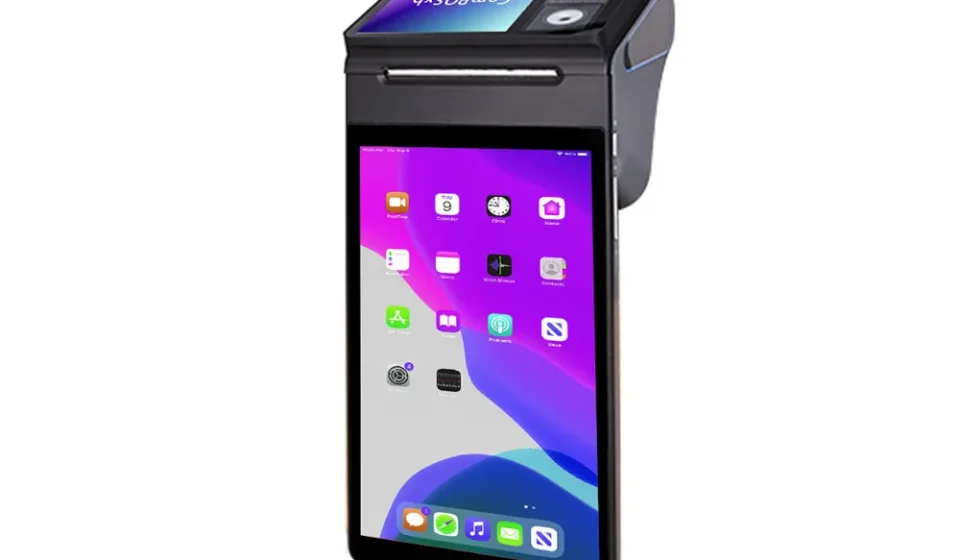

Original Equipment Manufacturer (OEM) services can give businesses greater flexibility when developing or sourcing point-of-sale hardware. Instead of relying only on standard off-the-shelf products, companies can work with manufacturers to develop equipment around particular technical, branding, or operational requirements.
For businesses considering customized POS equipment, understanding what an OEM relationship involves is an important first step. Working with a suitable POS Hardware Manufacturer can help organizations evaluate available customization, production, integration, and support options before committing to a hardware program.
What Are POS Hardware OEM Services?
OEM services generally involve manufacturing equipment according to specifications provided by a business or developed jointly with the manufacturer. The resulting hardware may be customized in terms of design, configuration, components, branding, or functionality.
In the POS industry, OEM projects can range from relatively simple product modifications to more specialized hardware development. The exact scope depends on the manufacturer’s capabilities and the customer’s requirements.
Why Businesses Consider OEM Hardware
Standard POS products are suitable for many businesses, but some organizations have requirements that are not fully addressed by generic equipment.
OEM services may be considered when a business needs:
- A specific physical design
- Custom branding or labeling
- Particular hardware configurations
- Specialized connectivity options
- Integration with existing equipment
- Products designed for a particular operating environment
- Larger-scale or recurring production
The main advantage is the ability to align hardware more closely with an organization’s practical requirements.
Custom Design and Appearance
Physical design can be an important consideration for businesses operating branded retail or hospitality environments. An OEM manufacturer may be able to modify aspects of a POS device’s appearance, depending on the project.
This can include enclosure design, dimensions, logos, labeling, or other visual elements. However, businesses should establish design requirements early because changes to physical components can affect development time and production costs.
Hardware Configuration
OEM projects can also involve selecting or modifying internal hardware configurations. Processing requirements, memory, storage, display specifications, ports, and other components may be evaluated according to the intended use.
The objective should be to create a configuration that meets operational requirements without adding unnecessary specifications. A clear understanding of the workload can help manufacturers recommend a practical design.
Connectivity and Peripheral Integration
POS systems often need to communicate with several peripherals. A customized device may need specific ports or interfaces to connect with scanners, printers, payment devices, displays, or other equipment.
During an OEM project, businesses should identify all required peripherals and communication methods. Planning these connections in advance can reduce integration problems during later stages of deployment.
Software Compatibility
Hardware customization does not eliminate the need for software compatibility. The finished equipment still needs to operate correctly with the intended POS application and operating environment.
Businesses should provide manufacturers with relevant software requirements, operating system information, driver expectations, and integration specifications. Testing these elements before mass production can help identify potential issues.
Prototyping and Testing
A prototype can provide an opportunity to evaluate an OEM design before larger quantities are produced. Businesses can assess physical usability, hardware performance, connectivity, and compatibility during this stage.
Testing is particularly important when the equipment includes customized components. Identifying design or integration problems early can be less disruptive than discovering them after full-scale production.
Production Considerations
Once the design has been approved, production planning becomes an important part of the OEM relationship. Businesses should understand expected quantities, production schedules, quality-control procedures, packaging requirements, and delivery arrangements.
For larger projects, consistent manufacturing quality is especially important. The manufacturer should have processes in place to maintain product specifications across production batches.
Quality Control
POS hardware may be used continuously in demanding commercial environments, making quality control an essential part of OEM manufacturing.
Businesses can ask how components are tested and what inspection procedures are used before products leave the manufacturing facility. Clear quality standards can help ensure that customized hardware performs consistently.
Branding and Packaging
Some OEM arrangements include customized branding and packaging. This can be useful for businesses that want equipment to form part of a broader product identity.
Branding requirements should be documented clearly, including logo placement, labels, packaging specifications, manuals, and other customer-facing materials where applicable.
Supply Chain and Component Availability
OEM hardware projects can depend on the availability of specific components. Changes in component supply can affect production schedules or require design adjustments.
Businesses should discuss component availability, alternative parts, expected product lifecycles, and potential replacement options. This is particularly important for projects intended to remain in production for several years.
Technical Support After Production
The relationship with an OEM manufacturer does not necessarily end when products are delivered. Businesses may require assistance with troubleshooting, replacement components, firmware, product revisions, or future hardware changes.
Before starting an OEM project, it is useful to clarify what post-production support is available. Clear responsibilities can make long-term hardware management easier.
Cost and Minimum Order Quantities
Customized hardware can involve development and production costs that differ from standard products. Businesses should consider engineering work, tooling, prototypes, component sourcing, testing, packaging, and production quantities when evaluating the total investment.
Minimum order quantities may also apply to certain OEM projects. Understanding these requirements early can help businesses determine whether customization is financially practical.
OEM vs. Standard POS Hardware
The choice between OEM and standard equipment depends on the organization’s priorities.
| Consideration | OEM Hardware | Standard Hardware |
|---|---|---|
| Customization | Generally greater | Usually limited |
| Branding | Can be customized | Typically predetermined |
| Development | May require additional planning | Usually faster to deploy |
| Initial complexity | Often higher | Generally lower |
| Large-scale consistency | Useful for recurring deployments | Depends on available products |
| Specialized requirements | Better suited | May require compromises |
Neither approach is automatically better. Businesses should choose based on their technical, operational, and commercial requirements.
Questions to Ask an OEM Manufacturer
Before beginning an OEM project, businesses should ask practical questions about the complete process:
- What types of POS hardware can be customized?
- What design and configuration options are available?
- Is prototype development provided?
- How is product testing handled?
- What are the minimum order requirements?
- How are component changes managed?
- What software and peripheral integrations are supported?
- What warranty and technical support are included?
- How are quality standards maintained during production?
- Can the manufacturer support future revisions?
The answers can help businesses determine whether an OEM provider is suitable for a long-term hardware project.
Making an OEM Decision
OEM services can be valuable when standard POS equipment does not fully meet a business’s requirements. Custom design, hardware configuration, branding, connectivity, and production planning can provide greater control over the final product.
However, customization also requires careful planning. Businesses should evaluate development requirements, compatibility, testing, production capacity, quality control, component availability, costs, and ongoing support before moving forward.
A well-planned OEM relationship can help organizations create POS hardware that fits their operational environment while providing consistency across larger deployments or specialized applications.