
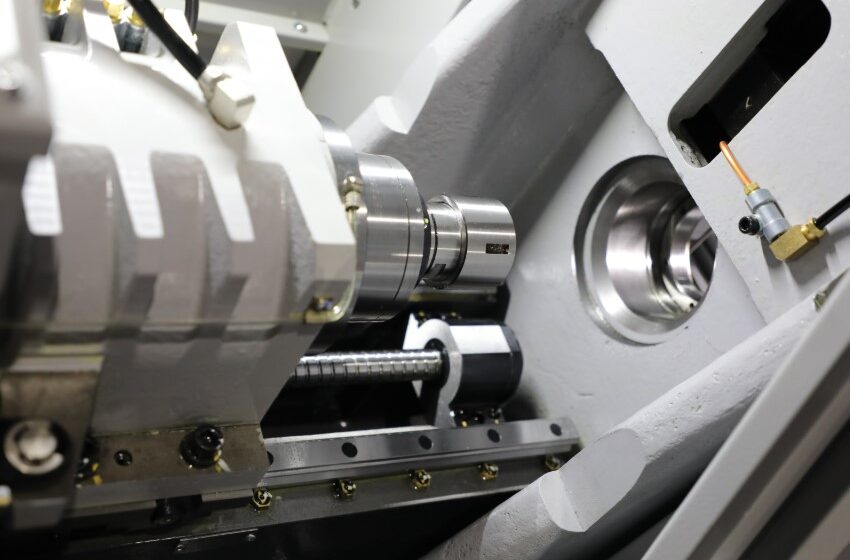

Small-part manufacturing demands accuracy, repeatability, and efficient production. Components such as pins, shafts, bushings, connectors, screws, and medical parts often require tight tolerances and complex machining in compact dimensions. Manufacturers need equipment that can handle these demands while keeping production consistent.
A swiss type automatic lathe machine offers a practical solution for this type of work. Its sliding-headstock design supports the workpiece close to the cutting area, which helps reduce deflection during machining. This design makes the machine particularly suitable for long, slender, and small-diameter components.
Why Small-Part Manufacturing Requires Specialized Machining
Small components often leave little room for machining errors. A minor dimensional variation can affect assembly, performance, or the reliability of the finished product.
Traditional turning methods may require several setups or additional operations to complete a small component. Each setup can introduce positioning differences and increase production time.
Swiss-type machining addresses these challenges by supporting the material near the cutting zone and allowing several machining operations within one setup.
How Swiss-Type Machining Improves Accuracy
Accuracy plays a major role in small-part manufacturing. The shorter distance between the guide bushing and cutting tools helps provide better support for slender workpieces.
This setup helps reduce vibration and material deflection during cutting. As a result, manufacturers can maintain more consistent dimensions across production batches.
The benefits become especially important when producing components with:
- Small diameters
- Long length-to-diameter ratios
- Tight dimensional tolerances
- Fine grooves and threads
- Multiple turned features
- Complex end geometries
Consistent machining also reduces the risk of producing parts that require rework or rejection.
Faster Production With Multiple Machining Operations
Small components often need more than simple turning. A single part may require drilling, threading, grooving, milling, and other operations.
A modern Swiss-type CNC machine can combine multiple operations in one machining cycle. Depending on its configuration, live tooling and multiple tool stations can handle different features without moving the workpiece to another machine.
This approach can shorten production routes and reduce manual handling. Manufacturers spend less time transferring parts between operations and more time producing finished components.
How Automation Supports Higher Output
Automation helps small-part manufacturers maintain steady production over long periods. Automatic bar feeding allows the machine to continue processing material without requiring an operator to load every individual workpiece.
Once the CNC program and machining process receive proper setup, the machine can repeat the programmed cycle with consistent movements.
Automation can help manufacturers achieve:
- More productive machine hours
- Fewer manual material-loading tasks
- More consistent production cycles
- Lower interruption rates
- Better labor utilization
These advantages become more noticeable when manufacturers produce thousands of identical or similar components.
Better Material Utilization
Material waste can have a significant effect on small-part production costs, especially when manufacturers use expensive alloys or specialty materials.
Swiss-type machines support controlled cutting close to the workpiece support area. Proper programming, tooling, and bar-feeding strategies can help manufacturers use raw material efficiently.
Manufacturers can also optimize cutting parameters to balance machining speed, tool life, surface quality, and material consumption.
Reducing Secondary Operations
A major advantage of advanced Swiss-type machining comes from its ability to complete several features during one cycle.
For example, a component may require turning on multiple diameters, drilling, threading, grooving, and milling. Completing these operations within one setup can reduce the need for separate machines.
Fewer secondary operations can provide several benefits:
- Shorter production lead times
- Less work-in-process inventory
- Reduced handling
- Fewer setup requirements
- Better dimensional consistency
The exact results depend on the machine configuration, tooling arrangement, component geometry, and production process.
Supporting Complex Small Components
Small parts do not always have simple geometries. Modern products often require miniature components with several precise features positioned along the same part.
Multi-axis machining expands the range of components manufacturers can produce. With suitable tooling and programming, one machine can perform turning and milling operations that would otherwise require separate processes.
This capability makes Swiss-type technology useful for precision components used in electronics, medical equipment, automotive systems, instrumentation, and other demanding applications.
Improving Production Consistency
Consistency matters just as much as individual part accuracy. A manufacturer may produce thousands of components for the same assembly, so every batch needs to meet the required specifications.
CNC control helps maintain programmed tool movements and machining sequences. Stable machine construction, appropriate tooling, proper coolant management, and regular inspection further support consistent production.
Operators can monitor tool wear and dimensional changes during production. Manufacturers can then adjust the process before small variations develop into larger quality problems.
Lowering Labor Requirements Without Sacrificing Quality
Small-part production can involve repetitive tasks when conventional equipment requires frequent operator intervention.
Automation reduces some of this manual workload. Operators can focus more on setup, inspection, tool management, and process monitoring instead of repeatedly loading and unloading individual components.
This does not remove the importance of skilled personnel. Instead, it allows experienced operators to spend more time managing the overall production process.
Why Machine Configuration Matters
Not every small component requires the same Swiss-type machine configuration. Manufacturers should evaluate the actual part requirements before selecting equipment.
Important factors include:
- Maximum bar capacity
- Number of CNC-controlled axes
- Main and auxiliary spindle capabilities
- Live tooling requirements
- Tool capacity
- Guide bushing arrangement
- Automatic bar feeding
- Coolant and chip management
- Required production volume
Manufacturers should also consider future production needs. A machine that handles only current requirements may limit growth when new components demand additional machining capabilities.
Choosing The Right Swiss-Type Machine
The best machine depends on the combination of part geometry, material, tolerances, production volume, and required operations.
Manufacturers should review sample components and determine which machining processes need to occur within the same cycle. They should also evaluate spindle performance, tooling flexibility, control features, automation options, and service support.
JSWAY provides Swiss-type CNC machining solutions designed for precision small-part production. Reviewing the available machine configuration against actual component requirements can help manufacturers choose equipment that supports both current and future workloads.
The Long-Term Benefits For Small-Part Manufacturers
A well-configured Swiss-type machine can influence more than individual machining cycles. It can improve the overall production workflow by combining precision, automation, and multi-operation machining.
Manufacturers may benefit from:
- More efficient production flow
- Improved dimensional consistency
- Reduced setup time
- Lower manual handling
- Better machine utilization
- Fewer secondary machining processes
- More predictable production output
These improvements can help manufacturers compete in markets where customers expect accurate components, repeatable quality, and reliable delivery.
Final Thoughts
Small-part manufacturing requires equipment that can maintain precision while handling demanding production schedules. Swiss-type machining provides strong workpiece support, multi-operation capabilities, and automation features that suit many small and slender components.
The right machine configuration can reduce setups, improve consistency, streamline production, and support higher output. JSWAY offers precision-focused Swiss-type CNC solutions that can help manufacturers build an efficient machining process around their specific component requirements.