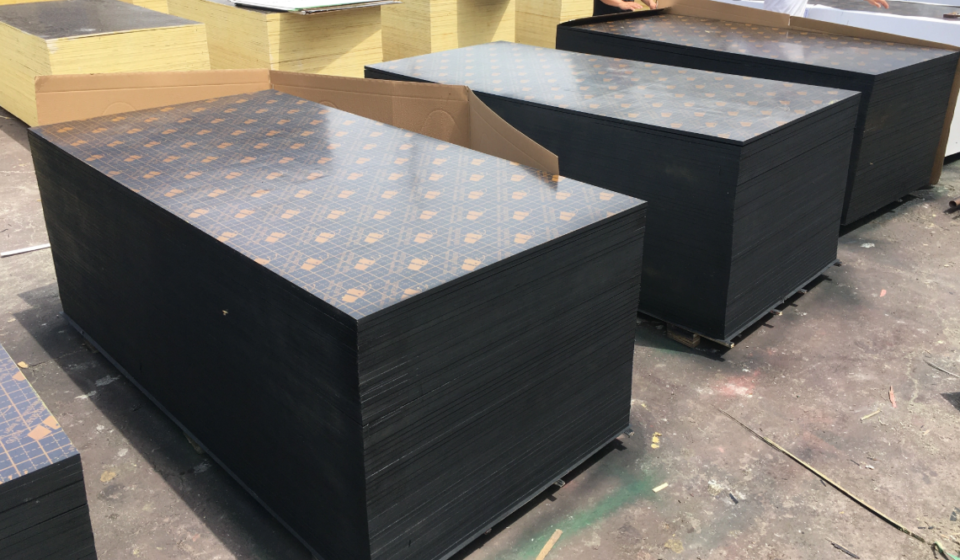
How to Evaluate Film Faced Plywood Suppliers: 6 Key Factors for Assessing Factory Capacity and Production Capability

Introduction: A Costly Lesson from Insufficient Production Capacity
A major infrastructure project in the Middle East placed an order for 5 containers of film faced plywood with a film faced plywood supplier that offered highly competitive pricing and promised “ready-to-ship” delivery. However, after the contract was signed, the supplier’s actual production capacity could only support one container per month.
The result: the project’s pouring schedule was disrupted, causing a 3-week delay and over $80,000 in additional costs. The procurement manager later admitted: “I only looked at price. I didn’t verify capacity.”
This story reveals a truth often overlooked in B2B procurement: when selecting a film faced plywood supplier, production capacity matters just as much as product quality. A competitive film faced plywood manufacturer must have the capacity to match project scale—otherwise, even the best quality cannot guarantee on-time delivery.
This article provides a systematic framework for evaluating supplier production capacity across 6 core dimensions, helping buyers identify a truly reliable wholesale film faced plywood supply partner.
Why Production Capacity Assessment Matters More Than Price
For wholesale film faced plywood procurement, capacity assessment delivers value in three ways:
1. Delivery Assurance
Project timelines depend on materials arriving on schedule. A film faced plywood factory with insufficient monthly capacity may postpone production when faced with bulk orders, leading to delivery delays.
2. Quality Consistency
Stable production requires stable equipment operation and consistent process parameters. Factories with volatile capacity often cut critical “panel resting time” when rushing orders, directly affecting glue bond strength and moisture content.
3. Emergency Response Capability
Construction sites often require urgent replenishment. A film faced plywood supplier with adequate capacity can flexibly adjust production schedules to respond quickly to urgent customer needs.
6 Core Production Capacity Verification Dimensions
The table below lists 6 key dimensions for evaluating a film faced plywood manufacturer‘s production capacity:
| Dimension | Assessment Focus | Recommended Standard | Verification Method |
| Factory Area | Foundation of production capability | ≥10,000m² | Video factory visit or on-site inspection |
| Annual/Monthly Capacity | Ability to support bulk orders | ≥5,000m³/month | Request capacity data |
| Production Line Configuration | Automation level affects quality stability | Multi-layer hot press + automatic glue line | Review equipment list and photos |
| Workforce Size | Quality control and operational stability | ≥100 employees | Video factory visit |
| Vertical Integration | In-house production from log to finished panel | Own peeling, drying, hot-press lines | Review production flow |
| Export Experience | Familiarity with target markets | Previous exports to target region | Provide export records |
Dimension Details:
1. Factory Area
A factory exceeding 10,000m² typically indicates a complete production chain—from log storage, veneer peeling, drying, gluing and assembly, to hot pressing, film application, cutting, and packaging. Smaller factories often rely on externally sourced semi-finished materials, reducing quality control capability.
2. Annual/Monthly Capacity
Capacity data directly reflects production scale. A reliable film faced plywood factory should have sufficient capacity to support bulk orders. Buyers should request capacity data and match it against their order volume requirements.
3. Production Line Configuration
Advanced production equipment is the prerequisite for stable quality. Multi-layer hot presses (typically 9-15 layers) and automatic glue lines are standard for quality concrete formwork plywood production. Old or poorly maintained equipment leads to out-of-tolerance thickness and unstable glue bond strength.
4. Workforce Size
Employee count reflects factory operational scale and quality control capability. Facilities with 100+ person teams typically have more comprehensive quality inspection processes—from incoming raw material inspection to finished product testing, with dedicated personnel at each stage.
5. Vertical Integration
Higher vertical integration means stronger quality control. A film faced plywood manufacturer with full in-house capability from log peeling to finished packaging can implement quality control at every stage, reducing quality fluctuations from external sourcing.
6. Export Experience
Export experience reflects the supplier’s understanding of international market standards. An experienced film faced plywood supplier is more familiar with international shipping packaging requirements, customs documentation, and target market certification standards.
Why Factory Scale Determines Quality Consistency
Many buyers are unaware that wholesale film faced plywood production involves several critical stages requiring adequate “waiting time”—veneer drying takes time, glue curing takes time, and post-hot-press cooling takes time. Factories with insufficient capacity often cut these necessary times when rushing orders, leading to:
Insufficient veneer drying → Excessive moisture content → Panels warp and mold easily
Inadequate glue curing → Substandard bond strength → High delamination risk
Insufficient post-press cooling → Poor panel flatness → Uneven joints
Large-scale factories with comprehensive capacity planning and standardized production rhythm do not sacrifice these quality safeguards to meet deadlines.
A Production Capacity Partner You Can Trust
When selecting a film faced plywood supplier, factory scale and production capacity are key indicators of long-term reliability. A truly capable film faced plywood manufacturer will back its claims with verifiable data.
Fortuna is precisely such a film faced plywood supplier. Since 1993, Fortuna has accumulated over 30 years of specialized expertise in the global construction formwork industry. Its 208,000m² manufacturing facility in Linyi, China—the world’s largest plywood production cluster—produces 300,000m³ annually, shipping over 100 containers monthly to 170+ countries.
Fortuna’s production capability is demonstrated across multiple dimensions: integrated production lines from log peeling to finished packaging, multiple multi-layer hot presses ensuring quality consistency for bulk orders, and ISO 9001-certified quality management systems covering every production stage. Whether for large-scale infrastructure projects or commercial construction, Fortuna’s capacity matches buyers’ volume requirements.
Moreover, Fortuna’s concrete formwork plywood and film faced plywood 18mm / 1220x2440mm products have served world-class landmark projects including the Beijing National Stadium (Bird’s Nest), Hamad International Airport (Doha), Shanghai Pudong International Airport, and Burj Khalifa (Dubai). The demanding delivery schedules of these projects fully validate Fortuna’s capacity strength and delivery capability as a film faced plywood manufacturer.
When buyers choose Fortuna, they are choosing not just high-quality wholesale film faced plywood, but a production partner capable of on-time delivery and consistent supply.
FAQs – Capacity Questions Buyers Frequently Ask
Q1: How can I verify a film faced plywood supplier’s actual production capacity?
A: Three recommended measures: ① Request real-time video walkthroughs of the factory floor to observe production line operation; ② Request recent export records to cross-check average monthly shipments; ③ Request equipment lists and employee counts. A reliable film faced plywood supplier will proactively cooperate with these verification requests.
Q2: Can a factory with 5,000m³ monthly capacity guarantee on-time delivery for my order?
A: This depends on your order volume. As a general rule, orders should not exceed 30% of a factory’s monthly capacity to provide sufficient scheduling flexibility for contingencies. Also ask about current capacity utilization—if the factory is already near full capacity, lead times may be longer.
Q3: Is there a direct correlation between factory scale and quality?
A: Not completely, but scale provides the foundation for quality stability. Large-scale factories typically have more standardized processes, stable raw material supply, and comprehensive quality inspection systems. However, final quality must still be verified through sample testing and third-party reports.
Q4: What are the advantages and disadvantages of new vs. established factories?
A: New factories have newer equipment and competitive pricing, but their production processes and quality control systems have not been long-term verified. Established factories offer stable processes and predictable delivery, but may be less flexible. Weigh based on project importance and order volume.
Q5: How can I assess whether a film faced plywood factory has capacity expansion capability?
A: Look at whether the factory has additional shifts available, backup production lines, and sufficient raw material inventory. These factors determine whether a factory can quickly scale up when order volume increases.
Conclusion
When selecting a film faced plywood supplier, price and quality are important—but production capacity assessment is equally critical. A supplier with insufficient capacity, even with excellent product quality, cannot guarantee timely project progress.
By verifying the six dimensions of factory area, annual capacity, production line configuration, workforce size, vertical integration, and export experience, buyers can systematically evaluate a film faced plywood manufacturer‘s delivery reliability and minimize supply chain risk.
With 208,000m² factory scale, 300,000m³ annual capacity, and a comprehensive quality management system, Fortuna provides reliable wholesale film faced plywood supply assurance for global B2B buyers. If you are seeking a film faced plywood supplier with reliable capacity and stable quality, Fortuna is a partner worth considering.
Ready to evaluate your next supplier? Contact us for factory video walkthroughs and capacity data reports.